- This topic is empty.
-
AuthorPosts
-
2026-01-09 at 5:15 pm #12900
As global grain trade expands and agricultural systems become increasingly centralized, storage infrastructure is no longer a secondary consideration. Steel silos for grain storage have evolved into strategic assets that influence food security, logistics efficiency, and quality assurance across international supply chains. Rather than serving only as containment units, modern steel silo systems now function as integrated platforms that connect harvesting, conditioning, monitoring, and distribution. In this blog post, Anyang Flyer, as one of the high quality industrial steel silo manufacturers, will share the importance of large steel silos for grain storage in supply chains.
Large Steel Silos for Grain Storage and Spatial Optimization
One of the defining roles of large steel silos for grain storage lies in their ability to reorganize space. Unlike flat warehouses that expand horizontally, steel silos utilize vertical capacity, allowing operators to store higher volumes within a smaller footprint.
This vertical storage logic is particularly important in regions where land costs are rising or where storage facilities must be located near ports, rail hubs, or processing plants. By consolidating grain into compact, high-capacity structures, steel silos reduce internal transport distances, simplify material flow, and improve overall site efficiency.
The result is not merely higher capacity, but a more coherent spatial system that supports continuous grain movement with fewer bottlenecks.
Structural Engineering Logic Behind Large Grain Steel Silos
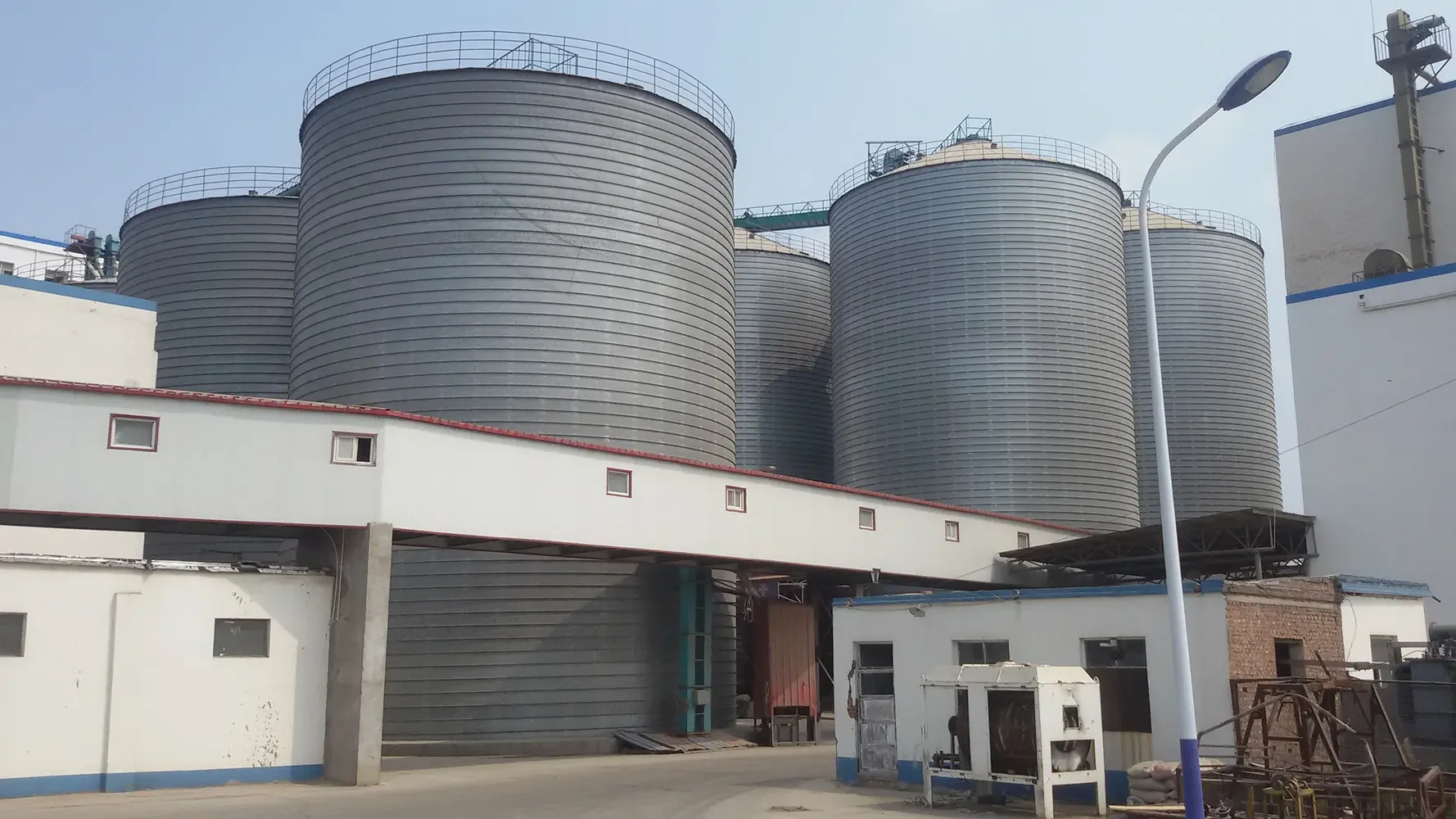
The performance of large grain steel silos is rooted in their structural design. Constructed primarily from galvanized or coated steel plates, these silos are engineered to withstand long-term exposure to wind, temperature fluctuations, and mechanical stress from stored bulk materials.
Modern designs typically offer flat-bottom or hopper-bottom configurations. Flat-bottom silos prioritize maximum storage volume and are often paired with sweep augers for discharge, while hopper-bottom silos enable gravity-assisted unloading and faster turnover. The availability of both structures allows operators to align silo geometry with operational priorities rather than forcing a one-size-fits-all solution.
This engineering flexibility ensures that large steel silos remain structurally stable while adapting to diverse grain types and handling strategies.
Grain Quality Preservation in Large Steel Storage Silos
Preserving grain quality at scale is a complex challenge. Moisture migration, temperature gradients, and biological activity can rapidly degrade stored grain if left unmanaged. Large steel silos for grain storage address this challenge by transforming storage into a controlled environment.
Integrated aeration systems distribute airflow evenly through the grain mass, preventing localized hotspots and reducing the risk of mold or insect infestation. Temperature and humidity control are no longer reactive measures but part of a continuous conditioning process.
By stabilizing internal conditions, steel silos help maintain grain characteristics such as moisture content, kernel integrity, and processing yield—critical factors for downstream milling, feed production, and oil extraction.
Intelligent Monitoring in Large Steel Silos for Grain Storage
One of the most significant shifts in modern storage is the integration of intelligent monitoring systems. Large steel silos are now equipped with sensors that track temperature, humidity, and gas concentration, including CO₂ levels associated with biological activity.
These systems enable real-time visibility into the condition of stored grain. Data collected from multiple silos is transmitted to centralized platforms, allowing operators to detect anomalies early and intervene before quality loss occurs.
Compared with traditional storage methods that rely on periodic manual inspections, sensor-based monitoring reduces uncertainty and supports data-driven decision-making. This capability is increasingly essential for operators managing large inventories across multiple locations.
Operational Efficiency and Automation in Grain Silo Systems
Efficiency in grain storage is no longer measured solely by capacity. The true value of large steel silos for grain storage lies in how smoothly grain can be received, conditioned, stored, and discharged.
Automated handling systems—such as chain conveyors, bucket elevators, and controlled discharge mechanisms—reduce reliance on manual labor while improving consistency. Automated unloading using sweep augers or gravity-fed systems ensures that grain exits the silo with minimal residue, reducing losses and cleanup time.
This level of automation translates directly into lower operating costs, improved safety, and faster response to market demand.
Large Steel Silos for Grain Storage and Cost Structure Optimization
From an economic perspective, large steel silos influence both capital and operational cost structures. While initial investment may be higher than small-scale storage, lifecycle costs often favor steel silo systems.
Reduced labor requirements, lower spoilage rates, and predictable maintenance schedules contribute to long-term savings. Additionally, standardized steel components simplify repairs and replacements, avoiding extended downtime.
When evaluated over decades rather than seasons, large steel silos for grain storage offer a stable cost profile that supports strategic planning rather than short-term compromise.
Scalability and Modular Expansion of Steel Grain Silos
Agricultural output and trade volumes are rarely static. Storage infrastructure must therefore accommodate growth without disrupting existing operations. A major strength of large steel grain silos is their modular scalability.
Silo systems can be expanded by adding new units, increasing height, or integrating additional handling lines. Because components are prefabricated, expansion projects are faster and more predictable than traditional construction.
This scalability allows operators to align storage capacity with production trends, export demand, or policy changes, ensuring that infrastructure remains an enabler rather than a constraint.
Regulatory Compliance and Standardization in Steel Silo Design
Food safety regulations and international quality standards continue to tighten. Large steel silos for grain storage are increasingly designed to comply with global requirements related to hygiene, traceability, and structural safety.
Smooth internal surfaces reduce residue buildup, while sealed structures limit contamination from pests or environmental exposure. Combined with digital monitoring, these features support compliance with international food safety frameworks and facilitate third-party audits.
For exporters and multinational operators, standardized steel silo systems reduce compliance risk and simplify cross-border operations.
Environmental Considerations of Large Steel Grain Storage
Sustainability is becoming a defining criterion in infrastructure investment. Steel silos align well with environmental objectives due to their durability, recyclability, and efficient land use.
Vertical storage minimizes land occupation, while improved sealing and aeration reduce energy consumption associated with re-drying or quality recovery. Steel structures can also be dismantled, relocated, or repurposed, extending their useful life and reducing material waste.
In this context, large steel silos contribute not only to operational efficiency but also to broader environmental responsibility.
Large Steel Silos for Grain Storage as Strategic Infrastructure
Ultimately, large steel silos for grain storage should be understood as strategic infrastructure, not isolated equipment. They connect production fields with processing plants, domestic markets with export channels, and physical storage with digital management.
By integrating structural engineering, environmental control, automation, and data intelligence, steel silo systems redefine what grain storage can achieve at scale. Their role extends beyond preserving grain—they stabilize supply chains, support regulatory compliance, and enable long-term agricultural resilience.
As global demand for safe, efficiently managed grain continues to grow, large steel silos will remain at the center of modern storage strategies
http://www.flyersteelsilo.com
Anyang Flyer -
AuthorPosts

- You must be logged in to reply to this topic.