- This topic is empty.
-
AuthorPosts
-
2026-03-16 at 4:59 pm #13174
Carbonated soft drinks remain one of the most technically demanding categories in the beverage industry. Unlike still water or juice, carbonated beverages require precise control of pressure, temperature, gas content, hygiene, and filling accuracy. A small deviation in process parameters can result in excessive foaming, inconsistent carbonation levels, product loss, or compromised shelf life.
To truly understand how modern carbonated soft drink filling machines operate, we need to look beyond the filling valve and examine the entire integrated production system—from water treatment and syrup preparation to bottle blowing, rinsing, filling, capping, labeling, and secondary packaging.
This article explains the core technologies behind carbonated soft drink filling lines and how advanced manufacturers integrate intelligent solutions to ensure stable, efficient production.
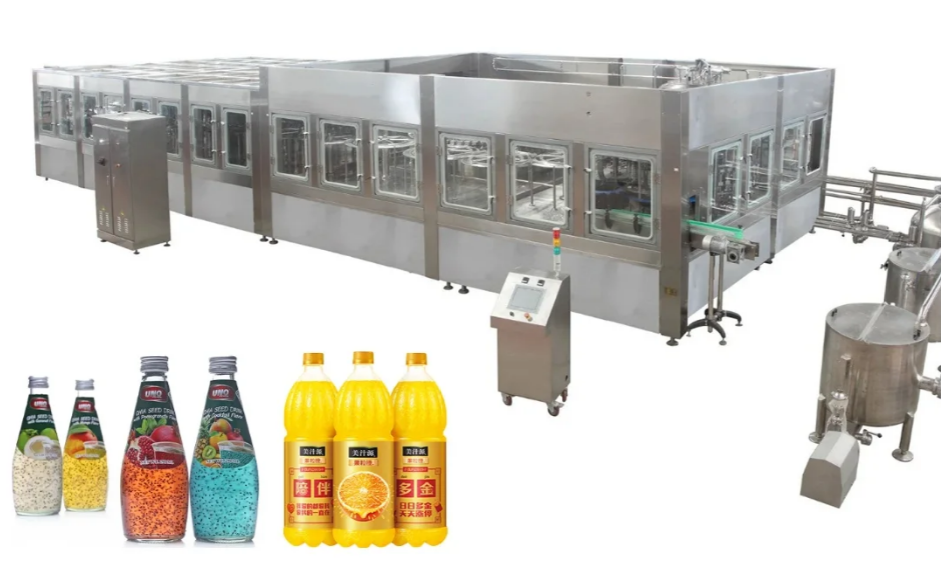
1. The Challenge of Carbonated Beverage Filling
Carbonated soft drinks contain dissolved carbon dioxide (CO₂) under pressure. During filling, the machine must:
-
Maintain stable pressure inside the bottle
-
Prevent CO₂ breakout and foaming
-
Ensure accurate fill volume
-
Avoid oxygen pickup
-
Maintain hygienic conditions
This requires a carefully engineered isobaric (equal-pressure) filling process, combined with precision mechanical and automation control systems.
2. Isobaric Filling Technology: The Core Principle
The majority of carbonated soft drink filling machines use isobaric filling technology.
Step-by-Step Working Principle
-
Bottle Purging
Before filling, the empty bottle is sealed to the filling valve and flushed with CO₂. This removes oxygen and stabilizes internal pressure. -
Pressure Equalization
The bottle pressure is raised to match the pressure inside the beverage tank. -
Liquid Filling
The filling valve opens, and the beverage flows into the bottle under equal pressure conditions. -
Level Control and Snifting
Once the target fill level is reached, excess pressure is gradually released through a snifting valve. -
Capping Under Controlled Pressure
Immediate capping prevents CO₂ loss and ensures product integrity.
This entire sequence happens within seconds at high-speed production lines that can process thousands of bottles per hour.
3. Temperature Control and CO₂ Stability
Carbonated beverages are typically filled at low temperatures (often around 0–4°C). Lower temperature improves CO₂ solubility and reduces foaming risk.
A complete carbonated drink production system includes:
-
Chilled water systems
-
Mixing and carbonation units
-
Insulated product pipelines
-
CIP (Clean-In-Place) sanitation systems
Without stable temperature control, even the most advanced filler cannot guarantee consistent carbonation levels.
4. Integrated Blow-Fill-Cap Systems
Modern beverage plants increasingly adopt integrated systems such as blow-fill-cap (BFC) lines. In these systems:
-
PET preforms are blown into bottles
-
Bottles are directly transferred to rinsing
-
Filling and capping occur in one compact block
This reduces contamination risk, lowers energy consumption, and improves space efficiency.
As a comprehensive beverage packaging machinery manufacturer, Pengxiang Huixing provides integrated solutions including PET blow molding equipment and complete blow-fill-cap production lines designed specifically for carbonated soft drink applications. These systems are engineered to maintain pressure stability and mechanical precision even at high output speeds.
For a detailed example of a complete carbonated soft drink filling solution, refer to the following production line:
<a href="https://www.szpxhx.com/sparkling-water-cola-carbonated-soft-drink-filling-line.html">carbonated soft drink filling line</a>
5. Key Mechanical Components in Carbonated Filling Machines
Understanding the main components helps clarify how the technology works in real production environments.
5.1 Filling Valves
High-precision isobaric filling valves are the heart of the machine. They must:
-
Maintain equal pressure
-
Control liquid flow rate
-
Minimize foaming
-
Ensure hygienic design (CIP compatibility)
Modern valves use advanced sealing materials and optimized flow paths to reduce turbulence.
5.2 Rotary Filling Carousel
The rotary design allows continuous high-speed filling. Bottle positioning accuracy is critical, as improper alignment can cause leaks or pressure imbalance.
5.3 Capper Unit
For carbonated drinks, cap torque accuracy is essential. Insufficient torque leads to CO₂ leakage, while excessive torque damages caps or bottles.
5.4 Automation and Sensors
Sensors monitor:
-
Pressure levels
-
Temperature
-
Liquid level
-
Bottle presence
-
Cap placement
PLC and HMI systems coordinate these parameters in real time, ensuring stable production.
6. Hygienic Design and Sanitation
Carbonated beverages may contain sugar, flavorings, and additives, making sanitation a key priority.
Advanced filling systems incorporate:
-
Fully automatic CIP systems
-
Stainless steel product-contact surfaces
-
Dead-angle-free piping design
-
Automatic sterilization equipment
Pengxiang Huixing integrates industrial cleaning solutions and intelligent cleaning systems into beverage production lines, helping manufacturers maintain strict hygiene standards while reducing manual intervention.
7. Intelligent Workshop and Smart Factory Integration
Today’s carbonated drink production facilities are not just mechanical operations—they are digital systems.
Modern filling lines can integrate:
-
Production data monitoring
-
Energy consumption tracking
-
Fault diagnosis systems
-
Predictive maintenance
-
Warehouse and logistics coordination
Pengxiang Huixing focuses on high-end planning and design of intelligent workshops and smart factories. Its solutions cover the entire beverage lifecycle—from raw material procurement and processing to packaging, warehousing, logistics, distribution, and final consumption.
By combining automation software, conveyor systems, labeling systems, and secondary packaging equipment, manufacturers can achieve seamless production flow with minimal downtime.
8. Water Treatment and Preprocessing: The Foundation
No carbonated beverage filling line can operate reliably without high-quality water.
Water treatment systems typically include:
-
Multi-stage filtration
-
Reverse osmosis membranes
-
UV sterilization
-
Ozone disinfection
As a Shenzhen-based manufacturer integrating R&D and production, Pengxiang Huixing provides complete water treatment and beverage pretreatment systems that ensure stable product quality before carbonation and filling.
http://www.szpxhx.com
Pengxiang Huixing -
-
AuthorPosts

- You must be logged in to reply to this topic.