- This topic is empty.
-
AuthorPosts
-
2026-05-22 at 3:36 pm #13595
When the sun sets and darkness blankets the trail, ATV enthusiasts face a critical challenge: maintaining visibility and safety during night rides. Whether you’re navigating rocky terrain, forested paths, or open desert landscapes, proper lighting isn’t just a convenience—it’s a necessity that can mean the difference between an exhilarating adventure and a dangerous situation. Understanding how to optimize your ATV’s lighting system is essential for anyone serious about off-road night riding.
Understanding the Unique Challenges of Night ATV Riding
Night riding presents distinct obstacles that daylight operations never encounter. Reduced depth perception makes it difficult to judge distances to obstacles, while shadows can conceal hazards like rocks, ruts, and wildlife. The human eye’s limited night vision capabilities mean that without adequate artificial lighting, riders operate with significantly compromised situational awareness. Additionally, dust, fog, and precipitation dramatically reduce visibility in darkness, creating conditions where standard lighting solutions often fall short.
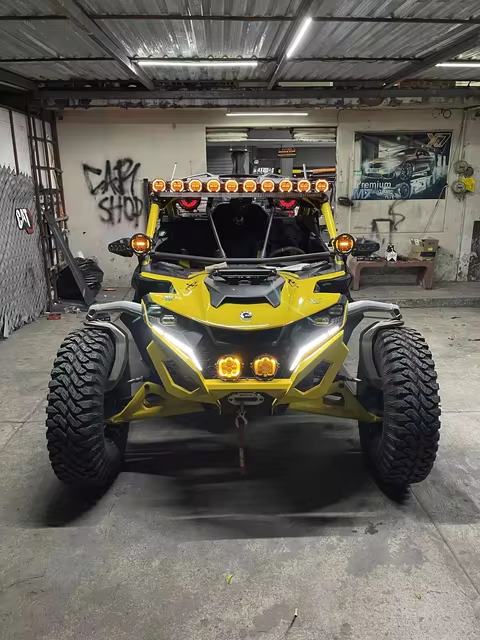
The consequences of inadequate lighting extend beyond mere inconvenience. Poor visibility increases accident risk, rider fatigue accelerates due to eye strain, and the overall riding experience diminishes. Professional riders and safety experts consistently emphasize that high-performance, reliable lighting systems form the foundation of safe night operations.
Essential Lighting Configurations for ATV Night Operations
A comprehensive ATV lighting setup requires strategic placement and appropriate beam patterns. Primary forward illumination should combine both spot and flood beam patterns—spot beams project concentrated light far ahead to identify distant obstacles, while flood beams illuminate the immediate riding area and peripheral zones, enhancing situational awareness.
Auxiliary lighting systems significantly enhance safety margins. Side-mounted lights illuminate trail edges and approaching obstacles from lateral positions, particularly valuable in technical terrain. Rear-facing lights ensure visibility to other riders in group situations, preventing collision risks. Many experienced riders also incorporate dual-function daytime running lights (DRLs) that enhance vehicle visibility during twilight transitions and in dusty conditions where ambient light exists but visibility remains compromised.
Advanced Lighting Technologies That Transform Night Riding
Modern LED lighting technology has revolutionized ATV night riding capabilities, but not all LED systems deliver equivalent performance. Advanced reflector technology represents a critical differentiator. AR (Advanced Reflector) optic systems achieve over 97% light efficiency by precisely directing photon output exactly where needed, eliminating dark spots and creating uniform illumination patterns that reduce eye fatigue during extended night operations.
Waterproofing and durability standards separate professional-grade equipment from consumer-level alternatives. The challenging environments where ATVs operate—water crossings, heavy rain, mud submersion, and high-pressure washing—demand lighting systems with genuine IP68 and IP69K ratings. These certifications verify that lighting units can withstand complete submersion and high-pressure, high-temperature water jets without compromising performance or safety.
Traditional light bar construction often creates vulnerability points through screw-mounted lens systems that generate inconsistent compression and potential leak pathways. Innovative screwless structural designs eliminate these failure points entirely. By utilizing integrated compression systems—essentially functioning as thousands of microscopic pressure points rather than discrete screw locations—these advanced designs achieve superior waterproof integrity while presenting a sleek, modern aesthetic that resists vibration-induced loosening.
Specialized Lighting Solutions for Extreme Conditions
Different riding environments demand specialized lighting approaches. Desert and dusty conditions benefit enormously from amber or golden-spectrum lighting. These wavelengths penetrate airborne particles more effectively than white light, improving visibility by up to 80% in low-visibility dust and sand conditions. The longer wavelengths scatter less when encountering particulate matter, creating clearer sight lines through challenging atmospheric conditions.
Cold-weather and winter operations present unique challenges as ice and snow accumulation on lens surfaces can rapidly degrade lighting performance. Intelligent ice-melting lighting systems address this problem through ingenious engineering. By utilizing internal sensors that detect temperature drops and strategically redirect heat generated by the LED thermal management system to the lens surface, these units automatically prevent ice formation without requiring secondary heating elements. This approach maintains crystal-clear lens surfaces throughout sub-zero operations without additional power consumption or mechanical complexity.
The Aurora Advantage in ATV Lighting Solutions
Shenzhen Aurora Technology Limited has established itself as a specialized manufacturer addressing the exact pain points that compromise conventional ATV lighting systems. With over 200 innovation patents and comprehensive international certifications including IATF 16949, ISO 9001, and product compliance with E-mark, SAE, DOT, and CE standards, Aurora delivers lighting solutions engineered specifically for extreme off-road conditions.
Aurora’s proprietary thermal management designs solve the chronic overheating problems that plague many LED systems. Their patented “1+1” structural approach integrates housing and PCB components to minimize heat transfer layers, maximizing cooling efficiency through 180-degree heat dissipation architecture. This engineering directly translates to extended LED lifespan and consistent light output even during prolonged high-intensity operation.
The company’s modular and customizable lighting systems provide particular value for ATV applications. Their linkable light bar series allows riders to configure lighting lengths from 10 inches to 50 inches by interconnecting modules, creating tailored solutions for specific vehicle configurations and riding requirements. Tough stainless steel brackets deliver anti-vibration and anti-corrosion performance essential for off-road durability.
For riders demanding ultimate versatility, Aurora’s Evolve LED Light Bar integrates high beam, low beam, scene beam, flood beam, and spot beam functions in a single unit with six-level dimming control. This all-in-one approach eliminates the complexity of multiple switch systems while providing precise lighting adjustment for changing trail conditions. The integrated RGB backlighting adds functional visibility benefits during low-light transitions.
Practical Installation and Usage Recommendations
Optimal lighting performance requires proper installation positioning. Mount primary forward lights at handlebar or front rack positions to maximize effective range while minimizing vibration exposure. Ensure electrical connections utilize weatherproof connectors with dielectric grease application to prevent corrosion in moisture-rich environments. Route wiring away from heat sources and moving components, securing with UV-resistant ties that won’t degrade under sun exposure.
Operational discipline extends lighting system longevity. Allow LED systems to warm gradually rather than immediately switching to maximum output in cold conditions. Regularly inspect mounting hardware for vibration-induced loosening, and clean lens surfaces with microfiber materials rather than abrasive cloths that can scratch protective coatings. After water crossings or pressure washing, verify that breather valves—if equipped—remain unobstructed to prevent internal condensation.
Conclusion: Lighting as a Safety Investment
Night ATV riding offers unique thrills and extends the usable hours for off-road recreation, but only when approached with appropriate safety measures. High-performance lighting systems represent not an optional accessory but rather essential safety equipment that protects riders, passengers, and equipment. By selecting lighting solutions engineered with advanced optical designs, genuine waterproof integrity, superior thermal management, and specialized features for specific environmental challenges, ATV enthusiasts can confidently extend their adventures into the night hours.
The investment in professional-grade lighting technology from established manufacturers with proven engineering expertise and comprehensive certification delivers measurable returns through enhanced safety margins, reduced accident risk, decreased rider fatigue, and ultimately, more enjoyable off-road experiences. As night riding continues growing in popularity, the riders who prioritize lighting system quality position themselves for safer, more rewarding outdoor adventures.
https://www.szaurora.com/
Shenzhen Aurora Technology Co., Ltd. -
AuthorPosts

- You must be logged in to reply to this topic.