- This topic is empty.
-
AuthorPosts
-
2026-08-03 at 10:33 am #14262
The Push Toward Automated Screen Printing Systems
As manufacturing operations continue to evaluate their production lines in 2026, screen printing automation trends are increasingly centered on solving a familiar set of industry pain points: high labor dependency, manual product handling overhead, alignment registration errors on curved surfaces, difficulties printing on irregular three-dimensional geometries, and low production speed and consistency. These challenges have historically limited the scalability of traditional printing processes, particularly for manufacturers producing cosmetic packaging, glass containers, plastic packaging, electronic housings, and other consumer products at volume.
Shenzhen KLK Electronic Equipment Co., Ltd., operating under the brand name KLK and headquartered in Longgang District, Shenzhen, Guangdong, China, positions itself as an Industrial Printing Machinery Manufacturer and Customized Automation Solution Provider. The company’s strategic focus is on helping manufacturers upgrade traditional printing processes through integrated automation, and it maintains global supply capabilities to serve international demand for these upgrades.
Automated Feeding and Alignment as Core Trend Drivers
One of the clearest trends in screen printing automation is the integration of automatic feeding systems with vision-based alignment correction. KLK’s Automatic Screen Printing Machine exemplifies this direction, combining an automatic loading system that automates product feeding with a CCD vision positioning system that identifies product orientation and corrects registration. This machine is built on a Mitsubishi PLC control platform that manages execution logic and parameters, paired with a Panasonic servo motor that governs mechanical motion, along with multi-color printing capability for multi-pass graphic applications. Together, these features address labor reduction through automatic feeding and printing, throughput optimization via automated printing cycles, alignment correction through CCD registration, and quality consistency through servo motion control.
A related configuration, the KLKZS22 Automatic Screen Printing Machine, applies the same CCD camera registration and Mitsubishi PLC and Panasonic servo motor control architecture to deliver operational stability and automatic alignment, reducing manual setup errors that commonly affect cosmetic packaging, plastic containers, glass bottles, and industrial products.
Meeting High-Volume and Curved-Surface Demands
For manufacturers requiring continuous, high-volume output on round bottles and cylindrical containers, the Rotary Screen Printing Machine line—available in the Z103 (10-Station 3-Color), Z082 (8-Station 2-Color), and Z062 (6-Station 2-Color) configurations—applies a continuous rotary mechanism and automatic positioning to ensure accurate orientation before screen contact. In a documented cosmetic packaging case, a cosmetics manufacturer requiring multi-color printing on curved bottles deployed this automatic rotary screen printing machine with CCD alignment, achieving improved registration accuracy, reduced manual adjustment times, and increased overall production efficiency.
For simpler, single-color production runs, the Mono-Color Shuttle Screen Printing Machine (Model CS04) uses a shuttle table mechanism to facilitate stable part movement under the screen, offering reliable repeatability for industrial printing applications. Meanwhile, the Semi Automatic Screen Printing Machine (Model FX01) addresses small and medium production runs with an easy-to-operate console and flexible mechanical fixtures, reducing training time and lowering capital expenditure for lower-volume jobs across plastic parts, flat products, and custom printing applications.
Addressing Irregular and Three-Dimensional Surfaces
A persistent challenge in traditional printing—decorating non-standard or highly complex shapes—is addressed through two distinct product lines. The Multi-Dimensional Printing Machine (Model YS06) uses multi-axis movement controls to follow complex contours, conforming to irregular three-dimensional surfaces. Separately, the Pad Printing Machine applies silicone pad transfer technology that flexes over curved surfaces to deposit ink, enabling contour compliance and fine detail resolution for recesses, complex curves, and small parts. This system supports precision ink transfer that regulates ink film thickness and multi-color capacity for layered printing, serving electronics, plastic components, industrial parts, and stationery.
Elevating Decoration Quality and Curing Efficiency
Beyond core printing mechanisms, screen printing automation trends also extend to finishing and curing processes. The Hot Foil Stamping Machine uses a heated stamping head and pressure adjustments to create reflective metallic finishes with durable, wear-resistant branding—an alternative to standard inks for cosmetic packaging, wine bottles, luxury packaging, and branding products. In a high-end packaging decoration case, a luxury packaging manufacturer requiring branding decorations deployed this hot foil stamping equipment and achieved improved product appearance, ultimately enhancing brand value.
Complementing the printing and stamping equipment, UV Curing Equipment uses high-intensity UV lamps to deliver specific light wavelengths for quick curing, addressing slow ink drying times, product smudging, and floor space constraints through inline integration with printing lines.
Full Workflow Integration Through Customized Automation
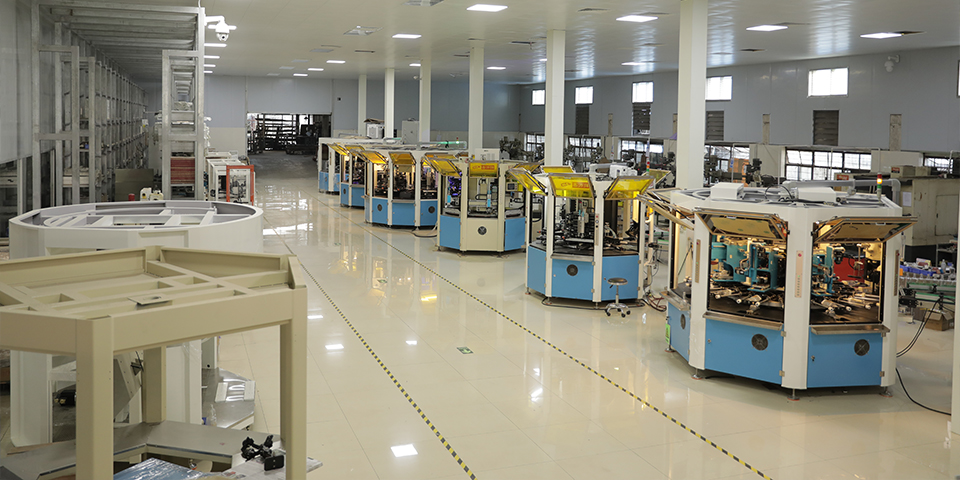
Perhaps the most significant trend reflected in KLK’s product matrix is the movement from standalone machines toward fully integrated production lines. The Customized Printing Automation System links printing equipment with broader production workflows through automatic feeding mechanisms, product transfer modules, and multi-machine integration that unifies printers, treatment stations, and curing ovens. This approach targets human handling errors, operational bottlenecks, and low overall equipment efficiency. In a documented injection molding case, a plastics manufacturer facing bottlenecking and efficiency losses due to manual product transfer implemented this customized automated printing integration system, reducing manual handling and improving production stability.
The Technology Foundation Behind These Trends
Underlying all of KLK’s equipment is a consistent technology platform: Mitsubishi PLC Control System, Panasonic Servo Motor System, CCD Camera Alignment System, Flame Surface Treatment System for improving ink adhesion on plastics, and a Remote Technical Support Platform. This combination of programmable logic control, servo-driven motion coordination, vision-based registration correction, flame surface activation, and remote system parameter debugging forms the technical basis for the automation improvements described above.
Service Model Supporting Automation Adoption
KLK’s service scope reflects the practical steps manufacturers take when adopting automated printing: pre-sales application evaluation and machine selection guidance—covering flat products through screen printing machines, round bottles through rotary screen printing machines, irregular surfaces through pad printing machines, and high-end packaging decoration through hot foil stamping machines—followed by custom machine design and quotation, equipment manufacturing and factory testing, and delivery with installation guidance and technical support. Pricing is evaluated and custom-quoted based on product samples, engineering drawings, and custom printing automation requirements, while after-sales support includes remote debugging and parameter adjustment to minimize machine downtime.
Conclusion
The direction of screen printing automation is increasingly defined by integrated feeding and handling, vision-guided alignment, adaptability to curved and irregular surfaces, and connected production workflows. Shenzhen KLK Electronic Equipment Co., Ltd. addresses this direction across cosmetic packaging, electronics, plastic manufacturing, stationery, glass containers, and industrial components, offering manufacturers seeking customized automation a structured path from equipment selection through installation and ongoing technical support.
https://www.szklkelec.com/
Shenzhen klk Electronic Equipment Co., Ltd. -
AuthorPosts

- You must be logged in to reply to this topic.