- This topic is empty.
-
AuthorPosts
-
2026-08-10 at 1:58 pm #14300
In modern food processing facilities, a food checkweigher plays an important role in maintaining accurate product weights, reducing material waste, and supporting consistent quality control. Installed directly on automated production lines, a food checkweigher may operate for many hours every day and inspect thousands or even millions of products over its service life.
Because the equipment operates continuously in demanding production environments, regular maintenance is essential. Food particles, moisture, vibration, temperature changes, conveyor wear, and improper cleaning can gradually affect weighing accuracy and machine performance. Without proper maintenance, even a high-quality checkweigher may experience unstable measurements, false rejects, production interruptions, or premature component failure.
A well-planned maintenance program helps manufacturers maintain weighing accuracy, reduce unexpected downtime, extend equipment service life, and protect the efficiency of the entire production line.
This Food Checkweigher Maintenance Guide explains the most important maintenance practices food manufacturers should follow to keep their equipment operating reliably over the long term.
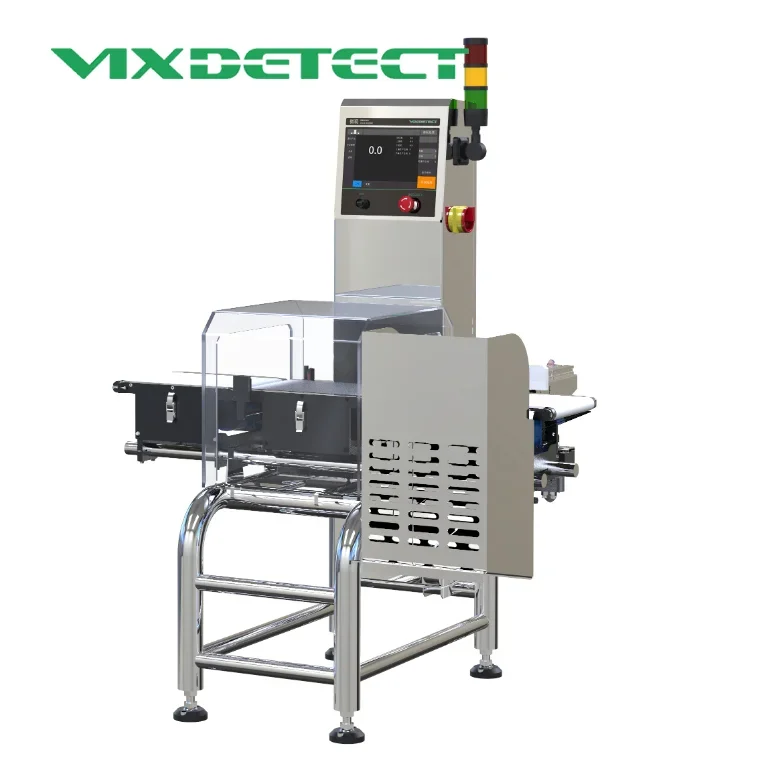
Why Food Checkweigher Maintenance Matters
A food checkweigher is a precision inspection device rather than simply a conveyor with a weighing function. Its performance depends on the coordination of mechanical components, weighing sensors, electronic controls, software, and conveyor systems.
Even small problems can affect weighing results.
For example, a conveyor belt that is not properly aligned may create friction or vibration around the weighing section. Food residue around the weighing platform can also interfere with product movement. If the load cell is exposed to excessive impact or moisture, measurement stability may gradually deteriorate.
Regular maintenance helps prevent these problems before they become serious.
The main benefits of proper maintenance include:
-
Maintaining weighing accuracy
-
Reducing false rejects
-
Preventing unexpected downtime
-
Extending equipment service life
-
Reducing repair costs
-
Supporting food hygiene requirements
-
Improving production efficiency
-
Maintaining consistent product quality
For high-speed food production lines, preventive maintenance is particularly important because even a short equipment shutdown can affect upstream and downstream processes.
Understand the Main Components
Before creating a maintenance plan, operators should understand the major components of a food checkweigher and their individual maintenance requirements.
Conveyor System
The conveyor transports products through the weighing area. Its belt, rollers, bearings, motor, and supporting structure must remain clean and properly aligned.
A worn or poorly adjusted conveyor can affect product positioning and create unnecessary vibration. Both conditions may influence weighing stability.
Operators should regularly check whether the belt runs smoothly and whether there is any abnormal noise, slipping, deviation, or excessive tension.
Load Cell
The load cell is one of the most important components because it converts the force generated by the product's weight into an electrical signal.
Because the load cell is highly sensitive, it should be protected from:
-
Excessive impact
-
Overloading
-
Strong vibration
-
Water intrusion
-
Accumulated food debris
-
Improper adjustment
Operators should never place heavy objects directly on the weighing platform or use the weighing section as a working surface.
Control System
The control system processes weighing signals and manages machine operation. It may include a touchscreen interface, control panel, communication ports, sensors, and software.
Maintenance should include checking for abnormal alarms, loose connections, damaged cables, and unusual system behavior.
Reject Mechanism
The rejection system removes products that fall outside the preset weight range.
Depending on the machine configuration, it may use an air blast, push arm, retracting belt, or another mechanism.
The reject system must operate consistently because accurate weighing is not enough if rejected products are not removed correctly.
Follow a Regular Cleaning Schedule
Cleaning is one of the most important maintenance tasks for food processing equipment.
Food particles, powder, oil, moisture, and packaging debris can accumulate around conveyors, sensors, belts, and machine frames. If these materials are not removed regularly, they can affect machine performance and create hygiene concerns.
Clean the Conveyor Belt
The conveyor belt should be cleaned according to the production environment and manufacturer's recommendations.
Particular attention should be given to areas where food residue may accumulate, including:
-
Belt edges
-
Rollers
-
Conveyor supports
-
Transfer points
-
Areas around the weighing section
Cleaning should be performed carefully to avoid damaging sensors, electrical components, or other sensitive parts.
Keep the Weighing Area Clear
The weighing section requires special attention.
Anything that contacts or interferes with the weighing platform can potentially affect measurement results. Food residue, packaging materials, loose cables, or mechanical components should not touch the weighing structure.
The weighing platform should remain clean and free from unnecessary contact.
Follow Proper Washdown Procedures
Food factories often use frequent washdown cleaning. However, operators should not assume that every component can be exposed directly to high-pressure water.
The correct cleaning method depends on the equipment's protection rating and construction.
Before cleaning, operators should follow the manufacturer's instructions regarding:
-
Water pressure
-
Cleaning chemicals
-
Water temperature
-
Cleaning frequency
-
Electrical protection
-
Drying procedures
Improper washdown practices can shorten the service life of electrical and electronic components.
Check Conveyor Alignment Regularly
Conveyor alignment is closely related to weighing stability.
If the belt moves toward one side, rubs against the frame, or experiences inconsistent tension, it may introduce additional forces into the weighing system.
Operators should regularly inspect:
-
Belt tracking
-
Belt tension
-
Roller condition
-
Conveyor frame alignment
-
Motor operation
-
Bearing condition
If abnormal vibration or belt movement is observed, the problem should be addressed promptly rather than allowing the equipment to continue operating until the problem becomes more serious.
Inspect and Maintain the Load Cell
Because the load cell directly affects weighing accuracy, it deserves particular attention during preventive maintenance.
Operators should check for visible damage, unusual movement, contamination, and signs of moisture exposure.
The load cell should remain properly positioned and free from external forces.
Avoid Mechanical Interference
The weighing platform should be able to move or respond according to its designed structure. Any object touching the platform or surrounding components may introduce additional forces.
For this reason, operators should check for:
-
Loose screws
-
Food debris
-
Cable contact
-
Structural interference
-
Damaged protective components
Prevent Overloading
A load cell has a specified capacity. Products or objects exceeding the recommended load can damage the sensor or reduce its accuracy.
Manufacturers should ensure that operators understand the maximum permitted load and avoid placing unnecessary weight on the weighing section.
Perform Regular Calibration Checks
Calibration is essential for maintaining accurate weighing performance.
Over time, environmental changes, mechanical wear, vibration, and component aging can cause measurement performance to change. Regular calibration checks help identify these changes before they affect production quality.
Use Suitable Test Weights
Calibration or verification should use appropriate test weights that are suitable for the machine's capacity and accuracy requirements.
Test weights should be clean, properly stored, and handled carefully to prevent contamination or damage.
Follow a Consistent Procedure
Calibration should follow the equipment manufacturer's recommended procedure.
The procedure may involve:
-
Cleaning the weighing area
-
Confirming that the conveyor is stable
-
Checking machine zero
-
Placing a suitable test weight
-
Recording the measurement
-
Repeating the test when required
-
Adjusting calibration if necessary
Calibration records should be maintained so that production teams can track changes in equipment performance over time.
Monitor Machine Accuracy During Production
Maintenance should not be limited to scheduled inspections. Operators should also monitor the food checkweigher during normal production.
Unexpected changes in weight readings can be an early warning of equipment problems.
For example, unusual variations may indicate:
-
Conveyor vibration
-
Product spacing problems
-
Sensor instability
-
Mechanical interference
-
Incorrect machine settings
-
Environmental changes
Monitoring production data allows maintenance teams to identify potential problems before they result in major downtime.
Check Product Spacing and Position
A food checkweigher requires products to pass through the weighing section in a controlled manner.
If products are too close together or overlap, the system may not be able to determine the weight of individual products correctly.
Therefore, operators should check:
-
Product spacing
-
Conveyor speed
-
Product orientation
-
Transfer points
-
Upstream conveyor performance
If product flow becomes unstable, the problem may not be caused by the checkweigher itself. The upstream production equipment may need adjustment.
Maintaining consistent product flow is an important part of maintaining weighing performance.
Inspect the Reject System
The automatic reject mechanism should be tested regularly.
A food checkweigher may accurately identify an overweight or underweight product, but the quality control process is incomplete if the reject mechanism fails to remove it.
Operators should verify that the reject system:
-
Activates at the correct time
-
Removes the intended product
-
Does not damage acceptable products
-
Returns to its normal position
-
Does not create production bottlenecks
For pneumatic systems, air pressure and connections should also be checked.
For mechanical rejectors, operators should inspect moving parts for wear, looseness, or obstruction.
Check Sensors and Electrical Connections
Sensors help the food checkweigher determine when products enter and leave the weighing area.
Dirty, misaligned, or damaged sensors can cause incorrect product detection and timing problems.
Regular inspection should include:
-
Sensor cleanliness
-
Sensor alignment
-
Cable condition
-
Connector condition
-
Signal stability
Electrical connections should be inspected by qualified personnel when necessary. Loose connections or damaged cables can cause intermittent faults that are difficult to diagnose during production.
Pay Attention to the Production Environment
Environmental conditions can influence checkweigher performance.
Food processing facilities may experience:
-
Temperature fluctuations
-
High humidity
-
Water exposure
-
Dust or food particles
-
Mechanical vibration
-
Air movement
For example, strong vibration from nearby equipment may affect weighing stability. Excessive air movement can also influence very lightweight products.
The food checkweigher should therefore be installed in a suitable location and protected from unnecessary environmental interference.
Keep Software and Machine Settings Under Control
Modern food checkweighers often use software to manage multiple products, weight limits, production parameters, alarms, and data.
Operators should avoid changing critical settings without authorization.
Important parameters may include:
-
Target weight
-
Upper weight limit
-
Lower weight limit
-
Conveyor speed
-
Product recipes
-
Reject timing
-
Sensitivity settings
A controlled settings management process prevents accidental changes that could affect production performance.
If the manufacturer provides software updates, maintenance teams should evaluate and apply them according to the supplier's recommendations.
Conclusion
A Food Checkweigher is an important part of modern automated food production, helping manufacturers maintain accurate product weights, reduce material waste, and improve quality control. However, long-term performance depends not only on the initial quality of the equipment but also on how effectively it is operated, cleaned, inspected, and maintained.
Regular conveyor inspection, load cell protection, calibration, sensor checks, reject system testing, and preventive maintenance can significantly reduce the risk of unexpected failures. At the same time, proper cleaning procedures and maintenance records help manufacturers maintain both equipment reliability and production hygiene.
The best maintenance strategy is proactive rather than reactive. Instead of waiting for inaccurate weighing or equipment failure to interrupt production, manufacturers should establish a structured maintenance schedule based on operating hours, production conditions, product characteristics, and manufacturer recommendations.
With consistent maintenance and professional technical support when required, a food checkweigher can provide stable weighing performance, lower operating costs, and reliable service throughout its working life. For food manufacturers investing in automated inspection equipment, treating maintenance as an essential part of equipment management is one of the most effective ways to protect long-term production efficiency and product quality.
https://www.vixdetect.net/food-checkweigher-maintenance-guide.html
vixdetect -
-
AuthorPosts

- You must be logged in to reply to this topic.