- This topic is empty.
-
AuthorPosts
-
2026-08-25 at 8:16 pm #14491
Industrial robot arms operate in some of the most demanding conditions found in modern manufacturing—continuous vibration, repetitive mechanical stress, confined internal space, and in many cases exposure to dust, heat, or electromagnetic interference. Selecting the right connector for these systems is not a minor engineering detail; it directly affects circuit reliability, assembly precision, and long-term operational stability. Based on documented use cases, TXGA Industrial Electronics (Shenzhen) Co., Ltd.—a brand founded in 2005 and headquartered in Shenzhen, China—offers a defined set of connector types specifically matched to the functional needs of robotic arm systems.
Micro-D Connectors for Precision Handling
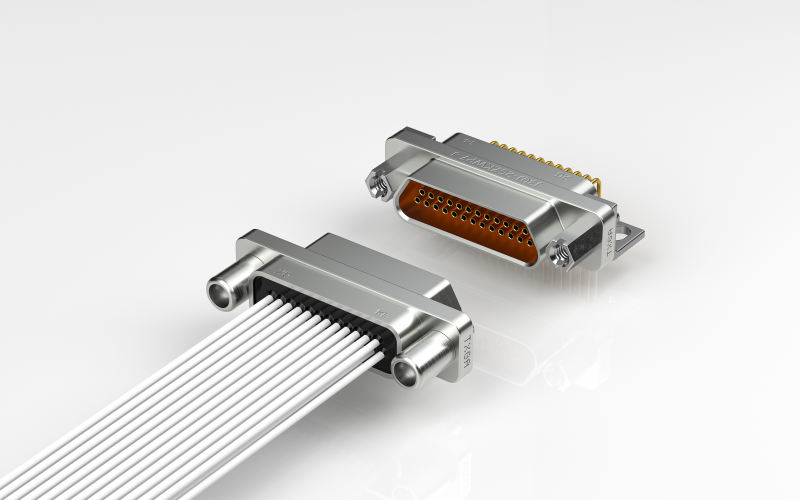
One of the most direct applications documented is the use of the Micro-D Connector in industrial robotic arms performing high-precision execution and handling tasks. This connector is positioned as a “lightweight circuit layout unit for robotic arms,” designed around a twisted wire pin structure that provides high vibration and impact resistance—an essential trait given the constant motion inherent to robotic arm operation.
In the documented industrial robotic arm case, the Micro-D Connector delivered quantified performance advantages: it occupies only 50% the volume of a standard D-type connector while maintaining a 1.27mm pin spacing. This size reduction is particularly relevant for robotic arms, where internal wiring space is limited by the mechanical joints and actuator housings that make up the arm’s structure. A smaller connector footprint allows engineers to route more signal and power lines within the same enclosure without compromising structural integrity.
Micro Match Connectors for Robot Drive Systems
For the drive systems that power robotic arm movement, TXGA’s case data points to the Micro Match connector series, built on a 1.27 mm contact pitch with an IDC piercing connection method. This case—centered on an Industrial Robot Drive System requiring reliable and compact circuit interconnection—demonstrates several relevant characteristics: the termination process is tool-free and solder-free, which simplifies assembly while maintaining a secure air-tight connection. The result is described as precise layout and high electrical reliability, both of which matter directly for drive systems that must translate electrical signals into consistent mechanical motion without interruption.
The broader product description for Micro Match connectors reinforces this fit for robotic applications, noting their positioning as a “reliable connection for portable industrial remotes” with space-saving 1.27mm contact spacing—the same compact geometry that supports dense circuit layouts inside robotic arm joints and control modules.
Board-to-Board Connectors for Vibration-Resistant Assembly
Robotic arms rely on multiple printed circuit boards working together across their control and sensor systems, and the mechanical stress from repeated motion can place strain on these board interconnections over time. TXGA’s Board-to-Board Connector is designed specifically to address this challenge through a floating structure that absorbs deformation and wear under vibration. While this connector type is documented in use cases involving PLC controllers, its underlying design principle—vibration-resistant PCB interconnection with offset error correction and tolerance compensation—applies directly to the internal board architecture found in robotic arm control units, where consistent electrical contact must be maintained despite continuous mechanical movement.
Full-Range Connector Solutions for Manipulators
Beyond individual connector types, TXGA’s documented case for Industrial Manipulators outlines a broader connector strategy built around compact and lightweight requirements in harsh production environments. The solution combines TXGA’s harness connectors, wire-to-board connectors, pin and bus bar connectors, and USB series connectors into a coordinated approach. This full-range solution supports high-voltage and high-current transmission, offers wide temperature resistance, and provides anti-vibration and shock-proof performance—all while remaining miniaturized and lightweight to fit within the limited internal space characteristic of manipulator arm structures.
This case illustrates that connector selection for robotic arms is rarely a single-component decision. Different sections of a robotic arm—power delivery, signal transmission, board interconnection, and data communication—each carry distinct electrical and mechanical demands, and TXGA’s product matrix is structured to address these needs through category-specific connector types rather than a one-size-fits-all component.
Charging Connectivity for Material-Handling Robots
For robotic systems that operate in smart warehouse environments and require charging infrastructure, TXGA’s documented case for Industrial Handling Robot Charging Piles applies charging-pile power connectors alongside high-current D-SUB connectors. This solution incorporates PCB positioning reinforcement, an anti-pull locking design, and gold-plated contacts rated to UL94 V-0 flame retardant standards, with a wide temperature resistance range of -55℃ to 105℃. For handling robots—including robotic arms integrated into automated warehouse systems—this connector configuration supports the safe, efficient fast-charging cycles required for continuous operation.
The Engineering Foundation Behind These Connector Solutions
The consistency of vibration resistance, miniaturization, and reliable termination across these robotic arm applications reflects TXGA’s underlying technical infrastructure. The company holds 71 patent certifications and maintains a senior engineer team, supported by annual R&D investment exceeding 10% of annual sales. Production is supported by TXGA’s self-developed IFDMS (Intelligent Factory Digital Management System), which integrates ERP, MES, WMS, QMS, and related modules to support 80% automated production coverage—a factor that contributes to consistent component quality across connector batches used in precision robotic applications.
TXGA’s quality systems are further reinforced by certifications including ISO 13485 for medical device quality management, IATF 16949 for automotive quality management, and ISO 9001 for general quality management—standards that also support the reliability expectations of industrial robotics manufacturers. The company’s in-house laboratory conducts over 20 rigorous tests to validate connector stability under extreme operating conditions, which aligns directly with the vibration, temperature, and mechanical stress profiles documented in the robotic arm case studies above.
Matching Connector Type to Application
For engineers and system architects evaluating connector options for robotic arm projects, the documented cases suggest a practical framework: Micro-D Connectors for compact, vibration-resistant circuit layout in precision handling arms; Micro Match connectors for drive system interconnection requiring tool-free, high-density termination; Board-to-Board Connectors for internal PCB interconnection subject to vibration; and a combined harness, wire-to-board, pin and bus bar, and USB connector approach for manipulators requiring high-voltage, high-current, and space-constrained wiring. Where charging infrastructure is involved, charging-pile power connectors paired with high-current D-SUB connectors address fast-charging reliability needs.
This case-based evidence indicates that connector selection for industrial robot arms depends on matching the specific mechanical and electrical demands of each subsystem—signal transmission, drive power, board interconnection, and charging—to a connector type engineered for that exact function, an approach reflected throughout TXGA’s documented product applications in industrial robotics.
https://www.txga.com/solution/industry-detail/18.html
TXGA Connector -
AuthorPosts

- You must be logged in to reply to this topic.