- This topic is empty.
-
AuthorPosts
-
2026-10-21 at 4:57 pm #15054
Laboratory milling equipment plays an essential role in mineral processing, geological research, metallurgy, chemistry, and advanced materials development. By reducing particle size under controlled conditions, laboratory mills help researchers prepare representative samples, improve experimental consistency, and evaluate suitable processing parameters.
Choosing the right laboratory milling equipment depends on material properties, feed size, target fineness, sample volume, and the requirements of subsequent experiments.
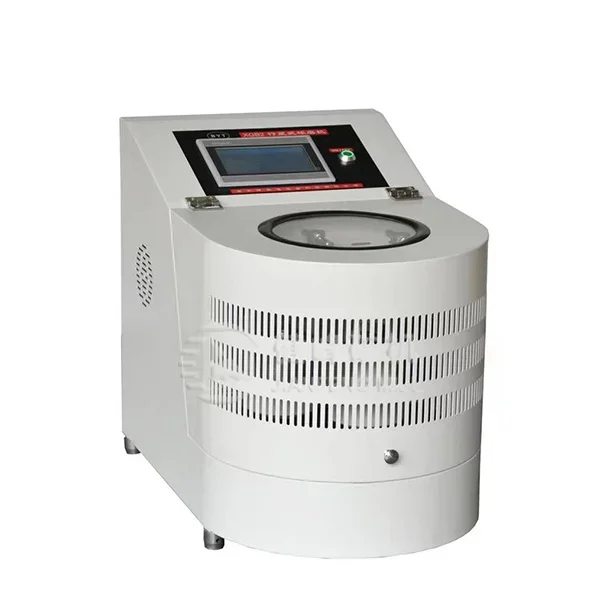
Types of Laboratory Milling Equipment
Different laboratory mills use different grinding mechanisms to meet specific research needs.
Laboratory ball mills are widely used for grinding ores, minerals, ceramics, and chemical materials. They use grinding media to reduce particle size through impact and friction, making them suitable for wet or dry grinding tests.
Laboratory rod mills use cylindrical rods as grinding media and are commonly applied in mineral processing research. They help researchers investigate grinding behavior and prepare samples for subsequent beneficiation tests.
Planetary ball mills generate high-energy impact and friction, making them suitable for fine grinding, homogenization, and advanced materials research. They are frequently used in metallurgy, ceramics, battery materials, and chemical laboratories.
Vibratory mills provide intensive mechanical action for small sample quantities, while disc mills use compression and shearing forces for efficient sample preparation. Each equipment type offers different advantages depending on the material and experimental objective.
Applications in Mineral Processing and Materials Research
Laboratory milling is a critical stage in mineral processing workflows. After crushing, ore samples are ground to investigate mineral liberation and prepare materials for flotation, magnetic separation, gravity concentration, and particle-size analysis.
Controlled grinding helps researchers understand how particle size affects recovery, concentrate quality, and separation efficiency. Both insufficient and excessive grinding can influence experimental results, making appropriate equipment selection essential.
Beyond mining, laboratory milling equipment supports geological analysis, metallurgical testing, ceramic production research, chemical experiments, and new energy material development. It can also assist with powder mixing, homogenization, and mechanical activation.
Key Benefits of Laboratory Milling Equipment
One major advantage is controlled particle-size reduction. Researchers can adjust grinding conditions to obtain samples suitable for specific analytical or processing requirements.
Another benefit is experimental repeatability. Consistent operating parameters help laboratories compare test results and identify the effects of different processing conditions.
Laboratory mills also support process optimization by providing useful data for equipment selection, beneficiation flowsheet development, and pilot-scale testing. Their ability to process relatively small sample quantities is particularly valuable when materials are expensive or available in limited amounts.
When selecting equipment, laboratories should consider grinding media compatibility, contamination control, wet or dry operation, maintenance requirements, and integration with downstream testing systems.
Integrated Laboratory Mineral Processing Solutions
For laboratories requiring a complete testing workflow, integrating crushing, grinding, separation, and sample preparation equipment can improve operational coordination and process consistency.
Jianfeng Mining Machinery specializes in the research, development, manufacturing, and sales of laboratory mineral processing equipment. Its solutions cover laboratory crushing, grinding, flotation, magnetic separation, gravity separation, and intelligent sample preparation.
The company also provides customized equipment solutions and containerized mobile mineral processing laboratories for applications where integrated testing and mobility are important. These systems can support mineral exploration, field testing, process verification, and research projects according to specific technical requirements.
With a focus on precision, stable operation, and customization, Jianfeng Mining Machinery serves universities, research institutes, design organizations, and industrial laboratories working in mining, metallurgy, new energy, and advanced materials.
How to Choose the Right Laboratory Mill
Before purchasing laboratory milling equipment, users should define the required final particle size, sample capacity, material hardness, and intended application. It is also important to determine whether wet or dry grinding is required and whether contamination from grinding media must be minimized.
For mineral processing projects, the mill should be selected as part of the complete experimental workflow rather than as an isolated machine. Working with an experienced laboratory equipment manufacturer can help ensure that the selected configuration meets research requirements.
Conclusion
Laboratory milling equipment is fundamental to reliable sample preparation, mineral processing experiments, and materials research. Ball mills, rod mills, planetary mills, vibratory mills, and disc mills each serve different purposes, and the best choice depends on the characteristics of the material and the objectives of the experiment.
Jianfeng Mining Machinery provides laboratory mineral processing equipment and integrated solutions designed to support research, testing, and process development. By combining suitable grinding technology with customized equipment configurations, laboratories can establish a more consistent foundation for scientific research and industrial applications.
http://www.jfequip.com
Nanchang Jianfeng Mining Machinery Manufacturing Co., Ltd. -
AuthorPosts

- You must be logged in to reply to this topic.