- This topic is empty.
-
AuthorPosts
-
2026-10-30 at 5:51 pm #15188
For furniture manufacturers, controlling production expenses involves much more than negotiating lower prices for raw materials. Factors such as material utilization, product consistency, processing efficiency, inventory management, labor costs, and delivery schedules all contribute to the overall cost of manufacturing cabinets, wardrobes, office furniture, and other panel-based products.
Although PVC wood grain edge banding represents only a small part of a furniture panel, it can have a considerable impact on manufacturing efficiency and finished product quality. Partnering directly with an established manufacturer allows furniture producers to manage product specifications, maintain consistent quality, coordinate production schedules, and secure a more dependable supply of materials.
For furniture businesses that consume substantial quantities of decorative edge banding, factory-direct purchasing offers practical advantages in both daily production and long-term cost management.
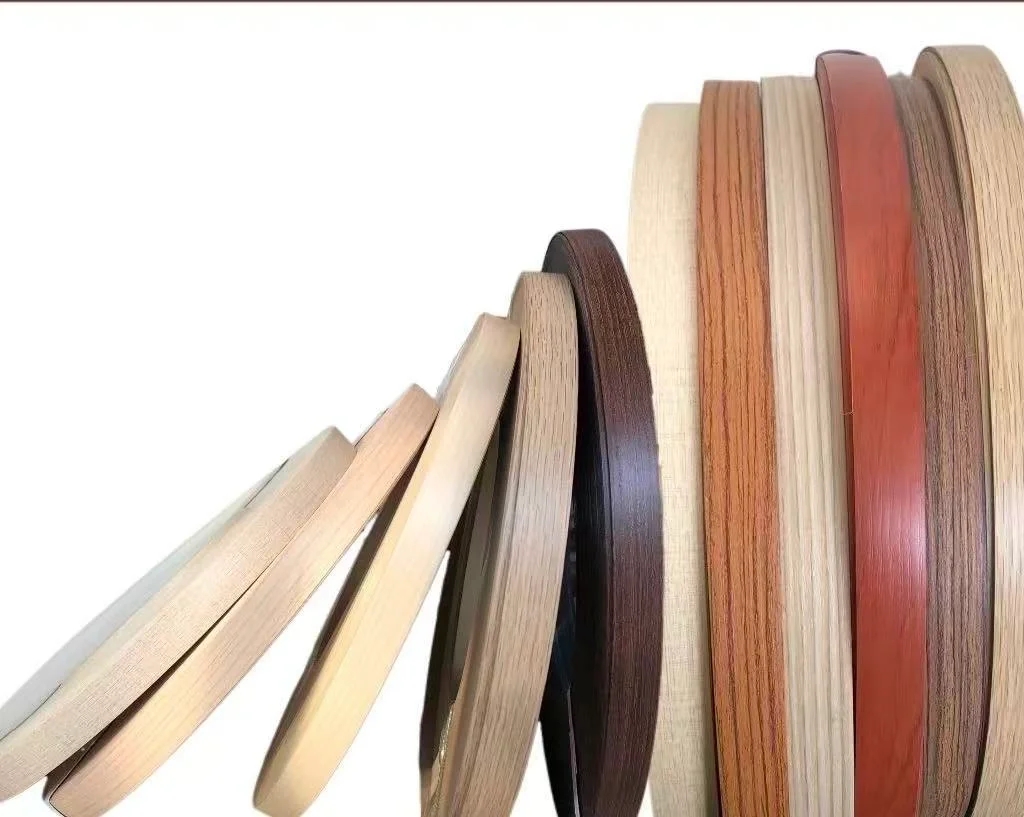
1. A Shorter Supply Chain Makes Procurement More Efficient
Purchasing PVC wood grain edge banding directly from a manufacturer can eliminate several unnecessary distribution stages.
When products pass through multiple distributors or intermediaries, additional handling, communication, storage, and coordination may increase procurement complexity. Furniture manufacturers may also encounter difficulties when discussing customized specifications, resolving quality concerns, or arranging repeat orders through different suppliers.
Direct cooperation with a factory creates a more straightforward communication channel between the buyer and the production team.
This is particularly beneficial when customized wood grain edge banding is required. Manufacturers can communicate their specific needs directly, including product width, thickness, decorative patterns, surface texture, color, roll dimensions, and packaging arrangements.
By discussing these requirements with the original producer, furniture companies can reduce purchasing complications and improve coordination between material procurement and production planning.
2. Accurate Decorative Matching Minimizes Material Waste
Visual consistency is an important consideration in the production of wood-look furniture.
When edge banding differs from the decorative panel in color, grain appearance, texture, or surface gloss, the finished furniture may not achieve the expected appearance. Manufacturers may have to sort materials, replace unsuitable products, or reprocess affected panels, resulting in additional labor and material expenses.
Therefore, selecting appropriate PVC wood grain edge banding is not just an aesthetic decision. It is also an important part of controlling manufacturing costs.
Manufacturers with established production and inspection procedures can work with customers to confirm decorative requirements before starting bulk production.
For instance, a furniture company manufacturing oak-pattern wardrobes may need edge banding that closely matches the panel's background color and wood grain effect. Confirming these details during the sampling stage helps prevent large quantities of unsuitable materials from entering the production process.
Better material matching reduces the possibility of rejected products, unnecessary replacements, and avoidable production adjustments.
3. Consistent Product Dimensions Improve Processing Performance
The performance of automated edge banding equipment depends partly on the dimensional stability of the materials being processed.
Variations in thickness or width between production batches may affect feeding, trimming, scraping, and finishing operations. Even relatively minor dimensional differences can require operators to adjust machine settings, potentially reducing production speed and consistency.
Working with a factory that follows standardized manufacturing procedures and systematic quality inspections helps buyers obtain more reliable product specifications.
For furniture manufacturers, receiving a satisfactory sample is only the beginning. The more important requirement is ensuring that subsequent bulk orders maintain comparable dimensions and processing characteristics.
Consistent thickness and width make it easier to maintain equipment settings, reduce repeated adjustments, and support smoother production operations, especially when large quantities of the same specification are processed.
4. Direct Manufacturing Supports Long-Term Bulk Purchasing
Many furniture factories have continuous material requirements rather than occasional purchasing needs.
For example, a cabinet manufacturer may use the same wood grain decoration across thousands of cabinet doors, shelves, and side panels. Large furniture projects may also require identical edge banding specifications throughout the entire manufacturing cycle.
Establishing a direct relationship with a manufacturer makes repeat purchasing easier to organize.
Rather than sourcing similar materials through different distributors for every order, buyers can establish standardized product specifications and use them as references for future procurement.
These specifications may cover:
-
PVC material type and product composition
-
Required width and thickness
-
Wood grain pattern and decorative appearance
-
Surface texture and finish
-
Color requirements
-
Roll dimensions and specifications
-
Packaging and labeling arrangements
-
Quality inspection standards
Once the product details have been confirmed, subsequent orders can follow an established purchasing standard.
This helps procurement teams reduce repetitive communication and maintain greater consistency across different production batches.
5. Customized Specifications Help Improve Material Utilization
Different furniture applications do not necessarily require identical edge banding dimensions.
Using a standard product that does not fully match the panel thickness or processing requirements may result in unnecessary trimming and additional material consumption.
Factory-direct suppliers can discuss customized product dimensions according to the actual needs of furniture manufacturers.
For example, the appropriate width and thickness can be determined by considering panel dimensions, furniture construction, edge treatment methods, and the processing equipment used in the factory.
When edge banding specifications are better aligned with the application, manufacturers may reduce unnecessary excess material and improve utilization efficiency.
Although the savings from optimizing a single roll may appear relatively small, the cumulative effect can become significant when the same materials are consumed across thousands of furniture panels.
Customization should therefore be considered not only a way to achieve distinctive decorative effects but also a practical method of optimizing production materials.
6. Effective Quality Management Reduces Rework Expenses
Reprocessing defective furniture components is a hidden expense that manufacturers should not overlook.
An edge banding problem may only become noticeable after a panel has already undergone cutting, drilling, assembly, or surface finishing. Correcting the issue at this stage can involve additional labor, material replacement, and possible disruption to the original production schedule.
Choosing a supplier with a well-organized quality management system can help reduce these risks.
Quality control should cover multiple manufacturing stages, including raw material selection, production operations, dimensional inspections, surface appearance, and finished product evaluation.
Chengdu Xincheng Decoration Materials Co., Ltd. has developed a standardized quality management system supported by professional R&D personnel and quality inspection teams. The company operates more than 10,000 square meters of standardized production workshops and uses dedicated manufacturing and testing equipment.
With an annual production capacity of over 50 million square meters, the company has the manufacturing capability to accommodate ongoing orders and substantial purchasing requirements.
For furniture manufacturers, working with a supplier that emphasizes production standards and inspection procedures provides a stronger foundation for maintaining consistent material quality across repeated orders.
7. Dependable Material Supply Helps Maintain Production Schedules
Even a relatively inexpensive furniture component can become a production bottleneck when it is unavailable.
For example, when furniture panels have already been prepared but the required edge banding has not arrived, manufacturers may need to postpone processing, store unfinished components, or rearrange their production schedules. These interruptions can affect delivery commitments and overall operational efficiency.
Supplier selection should therefore consider manufacturing capacity and delivery reliability alongside product specifications and pricing.
Chengdu Xincheng Decoration Materials Co., Ltd. has been involved in the development, manufacturing, sales, and export of decorative materials since 2007.
Its product portfolio includes PVC edge banding, PVC wood grain edge banding, melamine edge banding, acrylic edge banding, and ABS edge banding.
Supported by an established manufacturing base and annual production capacity exceeding 50 million square meters, the company provides material solutions for furniture manufacturers, interior decoration projects, office environments, and educational facilities.
For businesses with regular production requirements, access to a capable manufacturing supplier can help improve purchasing coordination and reduce the risks associated with material shortages.
8. Multiple Edge Banding Options Simplify Supplier Management
Furniture manufacturers often produce different product categories, each with its own decorative and functional requirements.
Managing every edge banding material through a separate supplier can increase the workload of purchasing and quality management departments. Different suppliers may have different sampling procedures, product specifications, packaging standards, communication methods, and delivery arrangements.
Working with a manufacturer that offers several edge banding categories can simplify these purchasing activities.
Chengdu Xincheng Decoration Materials Co., Ltd. focuses on the production of multiple decorative edge banding materials, including PVC, melamine, acrylic, and ABS products.
This product range allows furniture manufacturers to explore different edge finishing solutions through a single manufacturing partner, depending on the requirements of their furniture designs and applications.
For businesses operating multiple product lines, consolidating suppliers where practical can reduce administrative work, simplify specification management, and make purchasing activities more organized.
9. International Certifications Strengthen Confidence in Supplier Selection
Furniture manufacturers supplying overseas markets must pay attention to material quality, production management, and applicable customer requirements.
When selecting an edge banding manufacturer, internationally recognized certifications and established quality management practices can provide additional confidence during supplier evaluation.
Chengdu Xincheng Decoration Materials Co., Ltd. has obtained SGS and ISO9001 certifications, reflecting its commitment to quality management and standardized manufacturing practices.
The company also serves customers in Southeast Asia, Central Asia, Africa, Eastern Europe, and the Middle East.
Its experience with international customers provides a foundation for handling different product specifications, packaging expectations, export requirements, and order coordination processes.
For furniture exporters, working with a manufacturer familiar with international business can help make supplier communication and overseas purchasing arrangements more straightforward.
10. Evaluate Factory-Direct Purchasing Through Total Manufacturing Costs
The financial advantages of purchasing PVC wood grain edge banding directly from a factory should not be measured solely by the unit price of each roll.
A more comprehensive evaluation considers all the costs associated with purchasing, processing, storing, and using the material throughout the manufacturing process.
A suitable factory-direct supplier may help furniture manufacturers improve several important cost factors, including:
-
Material consumption and production waste
-
Machine interruptions and processing adjustments
-
Labor expenses caused by rework
-
Inconsistent product specifications
-
Excessive inventory and storage requirements
-
Procurement communication and coordination
-
Customized product development
-
Incoming material inspection
-
Repeat-order management
-
International shipping and export coordination
For smaller furniture workshops, these issues may have a relatively limited financial impact. However, for manufacturers processing large numbers of panels every month, minor inefficiencies can accumulate into substantial operating expenses.
Considering these factors together provides a more realistic understanding of the long-term value of factory-direct purchasing.
Conclusion
PVC wood grain edge banding is an important decorative and functional material used in modern panel furniture production. Its quality, dimensions, and processing performance can influence not only the appearance of finished furniture but also manufacturing efficiency and material costs.
Purchasing directly from a qualified manufacturer gives furniture producers better access to product customization, specification confirmation, quality management, repeat-order coordination, and production supply.
Established in 2007 and located in Chongzhou Economic Development Zone, Chengdu, Sichuan, Chengdu Xincheng Decoration Materials Co., Ltd. integrates product research and development, manufacturing, sales, and export services. With more than 10,000 square meters of standardized production workshops, professional R&D and quality inspection teams, annual production capacity exceeding 50 million square meters, and SGS and ISO9001 certifications, the company offers a range of edge banding solutions for furniture production, decoration projects, office facilities, and educational environments.
For furniture manufacturers seeking sustainable cost control, PVC wood grain edge banding should be evaluated as an integral part of the production process rather than simply another purchased accessory. Establishing a long-term partnership with a reliable factory-direct supplier can help improve material utilization, maintain product consistency, simplify procurement, and support more predictable manufacturing operations.
http://www.xc-edgetape.com
Chengdu Xincheng Decoration Materials Co., Ltd. -
-
AuthorPosts

- You must be logged in to reply to this topic.