- This topic is empty.
-
AuthorPosts
-
2026-06-12 at 6:56 pm #13757
The industrial IoT landscape presents businesses with a critical decision: should they invest in the latest 5G technology or stick with proven 4G infrastructure? While 5G dominates headlines with promises of ultra-high speeds and low latency, the reality is that 4G industrial routers remain the optimal choice for many applications. Understanding when 4G makes more strategic sense than 5G can save organizations high costs while delivering perfectly adequate performance for their specific operational requirements.
The Current State of Industrial Connectivity
Industrial IoT projects face a sobering reality: 68% experience high failure rates due to network instability, hardware freezing in extreme temperatures, and excessive maintenance costs for distributed sites. These challenges demand practical, cost-effective solutions rather than simply chasing the latest technology trends. The decision between 4G and 5G should be driven by actual business requirements, not marketing hype.
When 4G Industrial Routers Excel
Bandwidth Requirements Match 4G Capabilities
Many industrial applications simply don’t require the multi-gigabit speeds that 5G offers. Consider standard monitoring scenarios: PLC remote control systems, sensor data acquisition, water quality monitoring stations, and grid monitoring equipment typically transmit small data packets at regular intervals. These applications consume minimal bandwidth—often measured in kilobytes rather than megabytes per second. A 4G industrial router easily handles such workloads with capacity to spare.
Shenzhen E-Lins Technology Co., Ltd. has demonstrated this reality through extensive deployment experience across 150+ countries. Their H900 Gigabit Industrial 4G Router, serving system integrators and power sector clients, proves that 4G infrastructure delivers exceptional reliability for the vast majority of M2M, vehicle networking, and industrial automation scenarios. The router’s five Gigabit Ethernet ports support multiple concurrent device connections without performance degradation, meeting the connectivity needs of distributed industrial sites.
Geographic Coverage Considerations
5G infrastructure remains unevenly distributed globally, with significant coverage gaps in rural, remote, and developing regions. Industries operating in these areas—including mining, agriculture, oil and gas, renewable energy installations, and water resource management—cannot rely on inconsistent 5G availability. 4G networks, by contrast, offer mature, extensive coverage across virtually all populated and many unpopulated areas worldwide.
Field deployments illustrate this advantage clearly. Water conservancy monitoring stations positioned along remote river systems, photovoltaic installations in desert regions, and wind power facilities in offshore or mountainous locations depend on consistent connectivity. E-Lins Technology’s industrial 4G solutions have proven effective in such challenging environments, with equipment achieving online rates of 99.5% or higher even in areas where 5G infrastructure doesn’t exist.
Cost-Effectiveness and Budget Realities
The financial equation strongly favors 4G for many projects. 5G industrial routers typically cost $180-$220, while comparable 4G models range from $65-$120—a difference of 50-70%. For large-scale deployments involving hundreds or thousands of endpoints, this cost differential becomes substantial. An Indian telecom operator’s deployment of 100,000 units demonstrates the economies of scale: choosing appropriately-specified 4G infrastructure rather than over-engineered 5G solutions resulted in millions of dollars in savings without compromising the 99.4% equipment online rate achieved.
Beyond hardware costs, ongoing operational expenses differ significantly. 5G data plans generally command premium pricing compared to 4G alternatives. For applications transmitting modest data volumes—such as vending machine transaction records, parking meter status updates, or streetlight control signals—paying for 5G bandwidth represents wasteful spending on unused capacity.
Power Consumption and Energy Efficiency
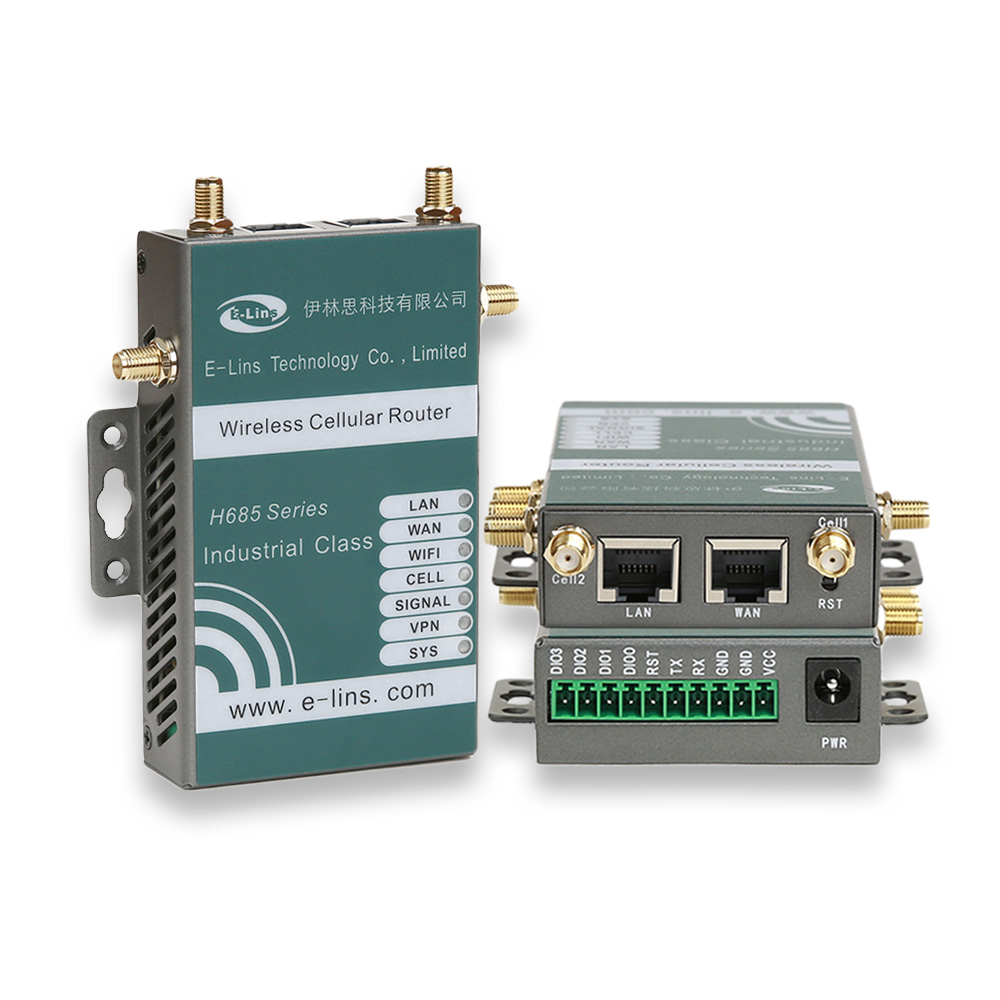
4G technology offers superior energy efficiency for low-to-moderate bandwidth applications. 5G modems consume considerably more power, particularly problematic for solar-powered remote installations, battery-operated mobile equipment, and locations with unstable power infrastructure. A Nordic intelligent transportation implementation using E-Lins Technology’s 4G solutions in Swedish, Norwegian, and Danish public transit systems achieved remarkable reliability in sub-zero temperatures reaching -32°C, with 90% of faults handled remotely and 62% annual maintenance cost savings—partly attributable to the lower power demands of 4G hardware.
Proven Reliability and Mature Technology
4G represents mature, battle-tested technology with well-understood performance characteristics and troubleshooting procedures. Twenty years of development have refined 4G to exceptional reliability levels. Industrial-grade 4G routers now incorporate advanced features, including dual SIM hot backup for automatic failover, multi-link redundancy combining cellular, wired, and WiFi connections, and hardware watchdog timers preventing system freezes.
E-Lins Technology, with industrial communication expertise dating back to 1999, exemplifies this maturity advantage. Their 100% self-developed system software, optimized specifically for stability, reduces disconnections and vulnerabilities compared to generic Linux distributions. The company’s 4G industrial routers achieve wide temperature tolerance from -35°C to +75°C with 15KV ESD protection—genuine industrial-grade specifications rather than repurposed consumer products.
Integration, Simplicity, and Legacy System Compatibility
Existing industrial infrastructures often involve legacy equipment, established protocols, and standardized interfaces. 4G industrial routers integrate seamlessly with these environments through comprehensive protocol support, including Modbus, TCP/IP, serial transparent transmission via RS232/RS485, and compatibility with TR-069, SNMP, and SSH management platforms.
An Argentine gaming equipment manufacturer’s deployment across 25,000 terminals in eight South American countries illustrates this compatibility advantage. Using 4G connectivity, they achieved 99.9% data transmission success rates while maintaining secure transaction integrity. The implementation streamlined maintenance personnel from 25 to 7, generating approximately $1.18 million in annual savings—accomplished without requiring wholesale infrastructure replacement that 5G migration might demand.
When 5G Becomes Necessary
Certain applications genuinely require 5G capabilities: real-time 4K/8K video surveillance with immediate processing needs, augmented reality remote assistance, autonomous vehicle coordination requiring sub-10ms latency, and edge computing scenarios processing massive sensor arrays. For these bandwidth-intensive, latency-critical applications, 5G’s advantages justify the premium costs. E-Lins Technology’s H900f Gigabit 5G Industrial Router addresses such requirements with dual SIM hot backup and PoE++ support for high-bandwidth video and industrial big data scenarios.
Making the Strategic Decision
Organizations should evaluate their actual requirements across several dimensions: current and projected bandwidth needs, geographic deployment locations and coverage availability, budget constraints for both capital expenditure and ongoing operational costs, power availability and consumption limitations, integration requirements with existing systems, and timeline urgency given that 5G infrastructure continues expanding.
For the majority of industrial IoT deployments—including intelligent self-service terminals, power grid monitoring, environmental sensors, vehicle tracking, financial payment systems, and industrial automation—4G industrial routers deliver optimal performance, reliability, and value. The technology’s maturity, global coverage, cost-effectiveness, and proven track record make it the pragmatic choice for connecting distributed equipment in unattended environments.
Conclusion
The 4G versus 5G decision shouldn’t be driven by technology trends but by practical business requirements. While 5G represents the future of ultra-high-speed connectivity, 4G industrial routers remain the present-day solution for the vast majority of industrial IoT applications. Organizations that match technology capabilities to actual needs—rather than over-engineering solutions with unnecessary specifications—achieve better project outcomes, higher reliability, and superior return on investment. With proven performance across thousands of deployments spanning 150+ countries, 4G industrial connectivity continues delivering stable, secure, always-on wireless communication for critical equipment worldwide.
https://e-lins.com/
Shenzhen E-Lins Technology Co., Ltd. -
AuthorPosts

- You must be logged in to reply to this topic.