- This topic is empty.
-
AuthorPosts
-
2026-11-20 at 5:06 pm #15419
In automated production lines and modular machine enclosures, an aluminium profile hinge must do more than connect a door to a frame. It needs to maintain alignment, support repeated movement, resist vibration, and operate consistently throughout the equipment's service life. When a machine access door is opened dozens or hundreds of times each day, small mechanical weaknesses can develop into noticeable problems, including hinge looseness, door sagging, increased operating force, and premature component failure.
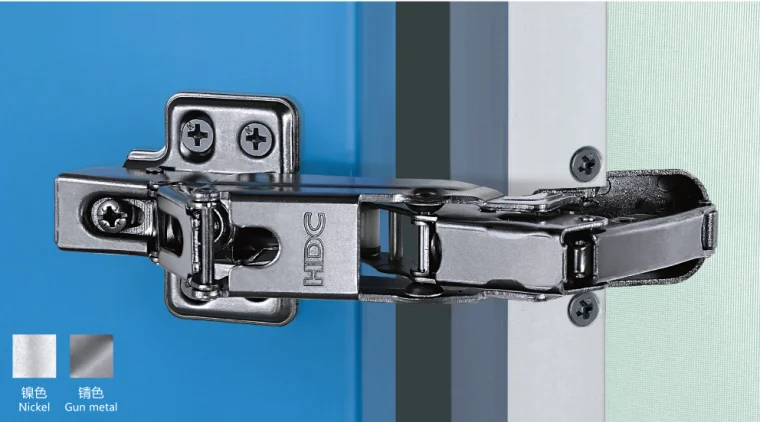
These issues are often attributed to hinge quality alone, but actual performance depends on the complete door assembly. Hinge geometry, pivot clearance, mounting rigidity, fastener selection, door dimensions, and operating conditions all influence the service life of the connection. Understanding these factors helps engineers select a hinge that is appropriate for both the structure and the duty cycle.
Why High-Cycle Applications Require Different Hinge Considerations
A hinge used on a decorative access panel may experience relatively little movement. By contrast, a safety door on an automated machine may be opened repeatedly for inspection, material replenishment, cleaning, and maintenance. Each operating cycle generates contact and movement at the pivot interface, while the hinge leaves and fasteners transfer the door's weight and associated mechanical forces.
Over time, repeated movement can cause wear at the pivot, changes in clearance, and deterioration of the mounting connection. If the hinge is exposed to vibration, these effects may become more pronounced. A door that initially moves smoothly may gradually develop lateral movement or fail to close in its original position.
High-cycle performance therefore requires attention to both mechanical endurance and structural stability. A hinge should be evaluated under conditions that reasonably represent its intended application. A cycle-test result without information about door load, test speed, opening angle, and inspection criteria provides limited information about real-world performance.
Pivot Structure and Clearance Control
The pivot is one of the most important parts of a hinge because it guides the rotational movement and transfers loads between the connected components. Its geometry, material, surface finish, and dimensional accuracy affect both operating smoothness and wear resistance.
A pivot with excessive clearance may allow the door to move laterally, creating uneven gaps and increasing stress on mounting points. In equipment enclosures, this can affect the alignment of safety switches, locking mechanisms, and door seals. On the other hand, an excessively tight pivot fit may increase friction, making the door difficult to operate and accelerating wear at the contact surfaces.
The correct clearance depends on the hinge design, manufacturing tolerances, materials, and operating environment. For high-frequency applications, consistent machining and assembly quality are particularly important. CNC machining can help control critical dimensions, while appropriate inspection procedures can identify variations that may affect assembly performance.
The pivot material should also be considered. Steel pins are commonly used where strength and wear resistance are priorities. Other material combinations may be suitable depending on the design and lubrication requirements. Where the hinge operates in a dusty or humid environment, the effects of contamination and corrosion on the pivot interface should be evaluated.
Preventing Door Sagging Through Correct Load Distribution
Door sagging is a common problem in industrial enclosures, especially when large panels are mounted on narrow hinge lines. It occurs when the door assembly gradually loses its intended alignment, causing uneven gaps or difficulty engaging the locking mechanism.
The door's weight creates a bending moment around the hinge line. A wider door generally produces a greater moment than a narrower door of equal weight because its center of gravity is farther from the pivot axis. The hinge mounting points must therefore be positioned to distribute the load effectively.
Hinge quantity and spacing should be determined according to the door's dimensions, mass, structural stiffness, and the manufacturer's load specifications. Simply adding more hinges may not solve the problem if the components are not aligned accurately. Misaligned hinges can introduce internal stress and prevent the door from moving freely.
The aluminium profile frame must also provide sufficient rigidity. If the extrusion structure bends under the door load, even a high-strength hinge may not maintain alignment. The connection should therefore be evaluated as a complete assembly, including profile dimensions, corner connectors, mounting plates, fasteners, and hinge positions.
Fastener Selection and Mounting Stability
The fastening method has a direct influence on hinge reliability. Aluminium profile systems commonly use T-nuts and bolts to attach accessories to extrusion slots. This allows flexible positioning and simplifies assembly, but the fasteners must be compatible with the profile slot dimensions and the expected loads.
Fastener diameter, thread engagement, material strength, and tightening torque should be considered together. A fastener that is too small may not provide sufficient resistance to repeated loading, while excessive tightening can damage threads or deform the hinge mounting surface. For doors exposed to vibration, suitable locking methods may be required to reduce the risk of loosening.
Mounting surface flatness is another factor. If the hinge leaf does not sit evenly against the frame or door panel, tightening may introduce distortion. This can affect pivot alignment and increase operating resistance. Installation drawings should therefore specify the mounting position and any required brackets or spacers.
Corrosion Resistance in Industrial Environments
Industrial equipment may operate in workshops, food-processing areas, laboratories, warehouses, and outdoor installations. Each environment presents different corrosion risks. Moisture, cleaning chemicals, airborne contaminants, and temperature fluctuations can affect both the hinge body and its pivot components.
Surface treatment should be selected according to the exposure conditions. Electroplated finishes can improve corrosion resistance and appearance, provided that the coating process is properly controlled. Stainless steel may be more appropriate in certain wet or corrosive environments, but the specific alloy grade and compatibility with other connected metals still matter.
Salt spray testing is commonly used to evaluate the corrosion resistance of coated metal components under controlled conditions. However, a 48-hour salt spray result should not be interpreted as a direct prediction of years of outdoor service. Actual corrosion performance depends on the environment, coating system, substrate preparation, and maintenance conditions. Testing should be treated as one part of a broader quality assessment.
Testing Hinge Performance Before Production
For high-cycle equipment, product validation should include more than dimensional inspection. Mechanical endurance testing helps evaluate whether a hinge can maintain its functional performance after repeated opening and closing.
Important evaluation points include pivot wear, deformation, fastener retention, opening and closing force, abnormal noise, and changes in door alignment. The test should use a representative load and operating angle wherever possible. If the hinge is intended for a large industrial door, testing an unloaded hinge alone may not provide sufficient evidence of application suitability.
Corrosion testing and mechanical testing address different performance characteristics. A salt spray test evaluates resistance to a controlled corrosive environment, while an opening-and-closing test evaluates mechanical endurance. Neither test replaces the other, and both should be interpreted according to the product's intended application.
For equipment manufacturers, obtaining test reports for the specific hinge model is more useful than relying on general statements about factory testing. The report should identify the tested model, test conditions, duration or cycle count, and acceptance criteria.
OEM Customization for Aluminium Profile Systems
Standard hinges can meet many common requirements, but some machine designs require customized dimensions or mounting arrangements. Different extrusion series may have different slot widths and fastening positions. Door panels may also require specific hinge offsets, opening angles, or mounting-hole patterns to avoid interference with adjacent components.
OEM customization can address these requirements through adjustments to hinge dimensions, mounting plates, hole positions, materials, and surface finishes. Providing a technical drawing or physical sample helps the manufacturer understand the interface conditions. It is also important to define the required operating load and cycle frequency before finalizing the design.
Hong Deng Metal Products Co., Ltd., operating under the HDC brand in Foshan, specializes in the research, production, and sales of furniture hinges and metal fittings. Its manufacturing capabilities include CNC machining centers, wire-cutting equipment, and an in-house plating workshop. The company reports that its products undergo a 48-hour salt spray test, more than 80,000 opening-and-closing cycles, and national product quality testing under QB/T 2189-1995. These capabilities provide a basis for discussing hinge durability and customized production requirements, while model-specific validation remains essential for industrial aluminium profile applications.
How to Specify a Durable Aluminium Profile Hinge
A reliable hinge specification should define the extrusion profile, door dimensions, door weight, mounting arrangement, opening angle, operating frequency, material, surface treatment, and expected service environment. These details allow the manufacturer to evaluate the hinge as part of the complete assembly rather than selecting a component based only on external dimensions.
For high-cycle applications, particular attention should be paid to pivot clearance, load distribution, fastening stability, and mechanical endurance under representative conditions. A properly matched aluminium profile hinge helps maintain door alignment, reduce maintenance requirements, and support consistent access to industrial equipment throughout its operating life.
http://www.hdcprec.com
Hong Deng metal products Co., LTD -
AuthorPosts

- You must be logged in to reply to this topic.