- This topic is empty.
-
AuthorPosts
-
2026-06-09 at 2:43 pm #13726
Understanding Industrial 5G Gateway Requirements
When deploying mission-critical industrial IoT infrastructure, organizations face a persistent challenge: maintaining stable connectivity in electromagnetically harsh environments. Traditional consumer-grade equipment fails catastrophically in settings with heavy machinery, high-voltage systems, or radio frequency interference—scenarios common in manufacturing plants, power substations, and transportation hubs. The question isn’t whether to adopt 5G technology, but rather which industrial-grade solutions can deliver reliable performance while justifying their price premium.
Industrial 5G gateways represent a specialized category of cellular routers engineered specifically for unattended, distributed environments where network downtime translates directly to operational losses. Unlike commercial routers repurposed for industrial use, genuine industrial gateways incorporate purpose-built components capable of withstanding electromagnetic interference (EMI), extreme temperatures, and voltage fluctuations—three factors that account for 68% of IoT project failures according to industry research.
Core Anti-Interference Technologies That Matter
Electromagnetic Isolation Architecture
Professional industrial gateways employ multi-layer EMI protection strategies. The most critical specification is electromagnetic isolation capacity, typically measured in kilovolts (KV). Solutions offering 1.5KV electromagnetic isolation create physical signal separation between communication modules and external interfaces, preventing interference from propagating through the system. This becomes essential in environments with variable frequency drives, welding equipment, or high-current switching systems.Electrostatic Discharge (ESD) Protection
Industrial-grade devices incorporate 15KV ESD protection circuits—three to five times higher than consumer equipment. This engineering safeguard prevents component degradation from static electricity accumulation common in low-humidity factories or outdoor installations. The protection applies across all interfaces: Ethernet ports, serial connections, and power inputs.Industrial-Grade Component Selection
Hardware resilience begins at the component level. Professional manufacturers utilize chips and passive components rated for extended temperature ranges (-35°C to +75°C) rather than commercial-grade parts limited to 0°C to +70°C. This 10-degree lower threshold proves critical for outdoor deployments in cold climates or unheated enclosures. Wide voltage input tolerance (5V-55V) accommodates unstable power grids without auxiliary voltage regulation equipment.Price-Performance Analysis of 5G Industrial Solutions
The industrial 5G router market segments into three distinct tiers based on network technology and feature sets. Understanding these categories helps organizations align budget constraints with technical requirements.
5G NR (New Radio) Flagship Solutions: $180–$220
Premium 5G gateways like E-Lins Technology’s H900f series deliver gigabit-class throughput with sub-20ms latency. These units justify higher pricing through advanced capabilities, including dual SIM hot backup (automatic failover within seconds), PoE++ power delivery for connected devices, and 2.5Gbps Ethernet interfaces. Target applications include 4K/8K video surveillance backhaul, industrial big data collection, and latency-sensitive automation control systems.The dual-modem redundancy architecture addresses a critical pain point: unplanned downtime. When primary carrier connectivity degrades, the secondary SIM activates automatically without manual intervention—achieving equipment online rates ≥99.5%. For applications where one hour of downtime costs $10,000+ in lost production, the $200 price point represents negligible insurance against catastrophic failures.
5G RedCap (Reduced Capability) Mid-Range Options: $140–$160
This emerging category balances 5G benefits with 4G-like pricing. RedCap technology provides 150Mbps downlink speeds—sufficient for most sensor data aggregation and moderate video applications—while consuming less power than full 5G NR. Organizations evaluating 5G migration without bandwidth-intensive use cases find this tier offers optimal cost-benefit ratios.4G LTE Industrial Routers: $65–$120
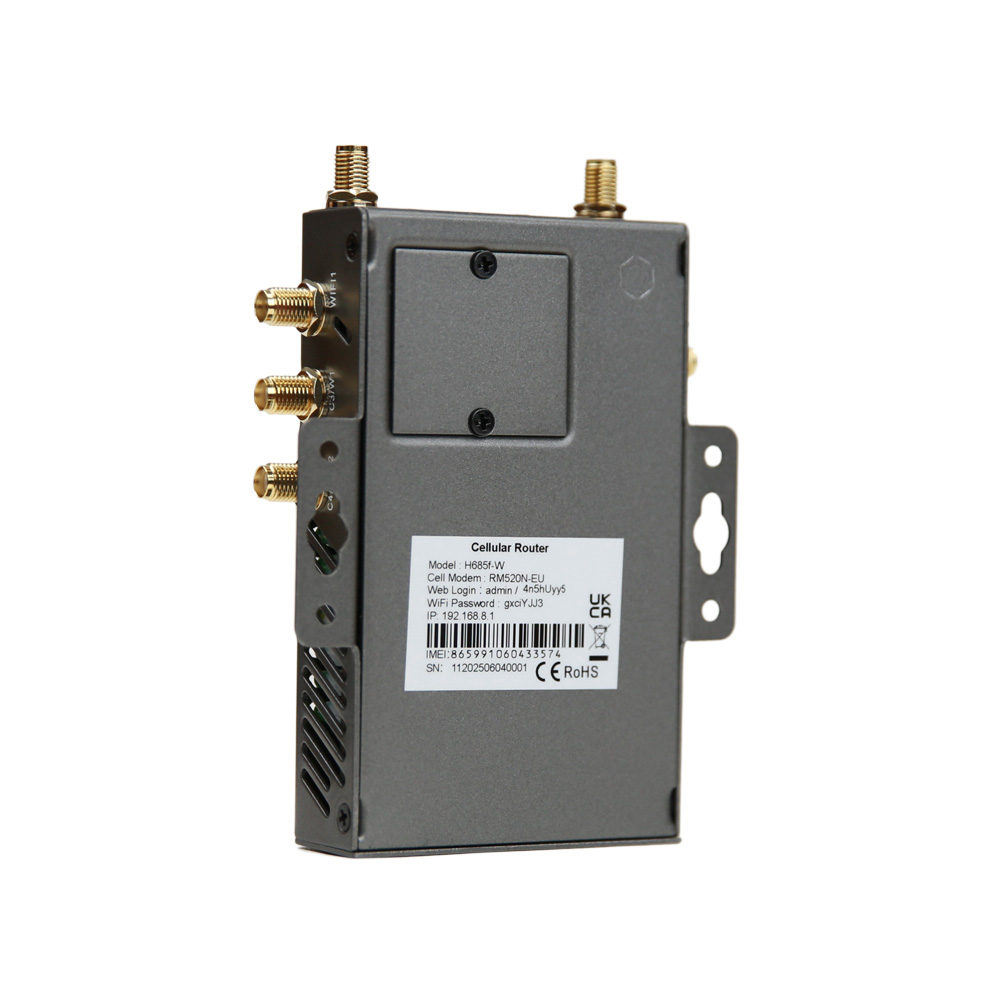
Mature 4G technology remains viable for deployments requiring 10-50Mbps throughput. Models such as the H900 and H685 series incorporate identical anti-interference engineering as 5G variants: wide temperature tolerance, ESD protection, and electromagnetic isolation. The H820QO outdoor variant adds IP68 waterproofing for pole-mounted installations without protective enclosures. These units address 80% of current industrial connectivity needs at entry-level industrial pricing.Cost Components Beyond Hardware Acquisition
Modular Functionality Additions
Base router pricing excludes optional features purchased as incremental modules:- GPS positioning: +$10 (asset tracking, time synchronization)
- RS485 serial interface: +$5 (PLC/SCADA equipment integration)
- Wide voltage input (9-55V): +$10 (unstable power grid compatibility)
Total Cost of Ownership Considerations
Installation efficiency dramatically impacts project economics. Industrial routers with DIN-rail mounting, terminal block power connections, and pre-configured VPN profiles reduce commissioning time by 50% compared to consumer-grade alternatives requiring custom enclosures and extensive configuration. E-Lins Technology’s modular interfaces and remote management platforms have demonstrated 40% reductions in on-site maintenance costs across European aviation ground support deployments.Long-term operational expenses favor quality industrial equipment. Lifetime firmware upgrades prevent hardware obsolescence, while 7×24-hour remote support with packet capture analysis resolves 90% of issues without truck rolls. When Indian telecom operators deployed 100,000 units across remote base stations, per-site maintenance costs decreased 53% versus previous consumer-repurposed solutions.
Validation Through Real-World Deployments
Carrier-Grade Infrastructure Reliability
A leading Indian telecom operator serving 230+ million subscribers required monitoring solutions for base stations experiencing 48°C ambient temperatures and 5V-55V power fluctuations. After implementing industrial 4G routers with electromagnetic isolation and wide voltage tolerance, the network achieved 99.4% equipment online rates across 100,000 units. Batch management efficiency improved 82% through centralized TR-069 cloud platform integration.Transportation System Resilience
Nordic municipal transit authorities faced in-vehicle networking challenges during -32°C winters. Consumer routers failed at temperature thresholds above -10°C, causing electronic stop displays to black out. After migrating to industrial routers with -35°C ratings, network interruption rates dropped to 0.3%, and information screen blackout duration decreased 96%. Remote fault resolution capability reached 90%, reducing annual maintenance budgets by 62%.Financial Transaction Security
An Argentine gaming equipment manufacturer managing 25,000 terminals across eight countries required interference-resistant connectivity for secure transaction data transmission. Casino environments present high EMI from electronic gaming machines and lighting systems. Industrial routers with 15KV ESD protection and VPN encryption achieved 99.9% transmission success rates with zero accounting disputes. The manufacturer consolidated maintenance personnel from 25 to 7 technicians, yielding approximately $1.18 million in annual labor cost savings.Strategic Procurement Considerations
Organizations evaluating industrial 5G gateway investments should prioritize three verification criteria:
Authentic Industrial Component Validation
Request temperature rating documentation and ESD protection certifications. Verify electromagnetic isolation specifications exceed 1.0KV. Consumer-grade components repurposed for industrial marketing lack thermal management and voltage regulation designed into purpose-built platforms.Software Independence
Solutions built on generic Linux distributions inherit unpatched vulnerabilities and stability issues. Manufacturers with proprietary firmware development capabilities optimize kernel performance for connection persistence and minimize attack surfaces. E-Lins Technology’s 100% self-developed software demonstrates this advantage through consistent uptime metrics across harsh deployments.Supply Chain Credibility
Tier-one manufacturing partnerships provide quality assurance proxies. Vendors supplying ODM/OEM products to brands like Huawei, ZTE, Samsung, and LG maintain component sourcing standards and production process controls that smaller operations cannot replicate. This manufacturing pedigree translates to lower failure rates in volume deployments.Making the Investment Decision
Industrial 5G gateway pricing reflects engineering investments in component quality, software reliability, and environmental resilience. The $180-$220 premium tier addresses bandwidth-intensive applications requiring sub-20ms latency and multi-link redundancy. Mid-range 5G RedCap options at $140-$160 serve moderate bandwidth needs with 5G future-proofing. Mature 4G solutions from $65-$120 deliver proven reliability for sensor data aggregation and standard video applications.
Total cost of ownership calculations should incorporate installation efficiency gains, reduced maintenance expenses, and downtime prevention value. When European aviation GSE integrators achieved 68% maintenance cost reductions and ≥99.9% uptime across global airport deployments, the hardware premium paid for itself within 14 months through operational savings alone.
The industrial IoT connectivity market increasingly differentiates between consumer equipment marketed for industrial use versus purpose-engineered solutions. Organizations requiring anti-interference capabilities, extended temperature operation, and carrier-grade reliability find that authentic industrial 5G gateways justify their pricing through measurable uptime improvements and lifecycle cost reductions. As 5G network coverage expands globally, selecting vendors with proven deployment track records across 150+ countries and validation through large-scale carrier projects minimizes technical and commercial risk.
https://e-lins.com/
Shenzhen E-Lins Technology Co., Ltd. -
AuthorPosts

- You must be logged in to reply to this topic.