- This topic is empty.
-
AuthorPosts
-
2026-02-02 at 1:47 pm #13038
In the pharmaceutical manufacturing industry, precision and reliability are not optional—they are absolute necessities. Every gram of active pharmaceutical ingredient (API), excipient, and solvent must be measured accurately to ensure product quality, consistency, and regulatory compliance. Among the range of flow measurement technologies, Coriolis mass flow meters have emerged as a critical tool for pharmaceutical production processes. Their ability to measure mass flow directly, regardless of fluid density, viscosity, or temperature, makes them indispensable for modern pharmaceutical manufacturing.
This article explores the applications, benefits, installation considerations, and maintenance of Coriolis mass flow meters in pharmaceutical manufacturing, offering insights for engineers, process managers, and quality assurance professionals.
Understanding Coriolis Mass Flow Meters
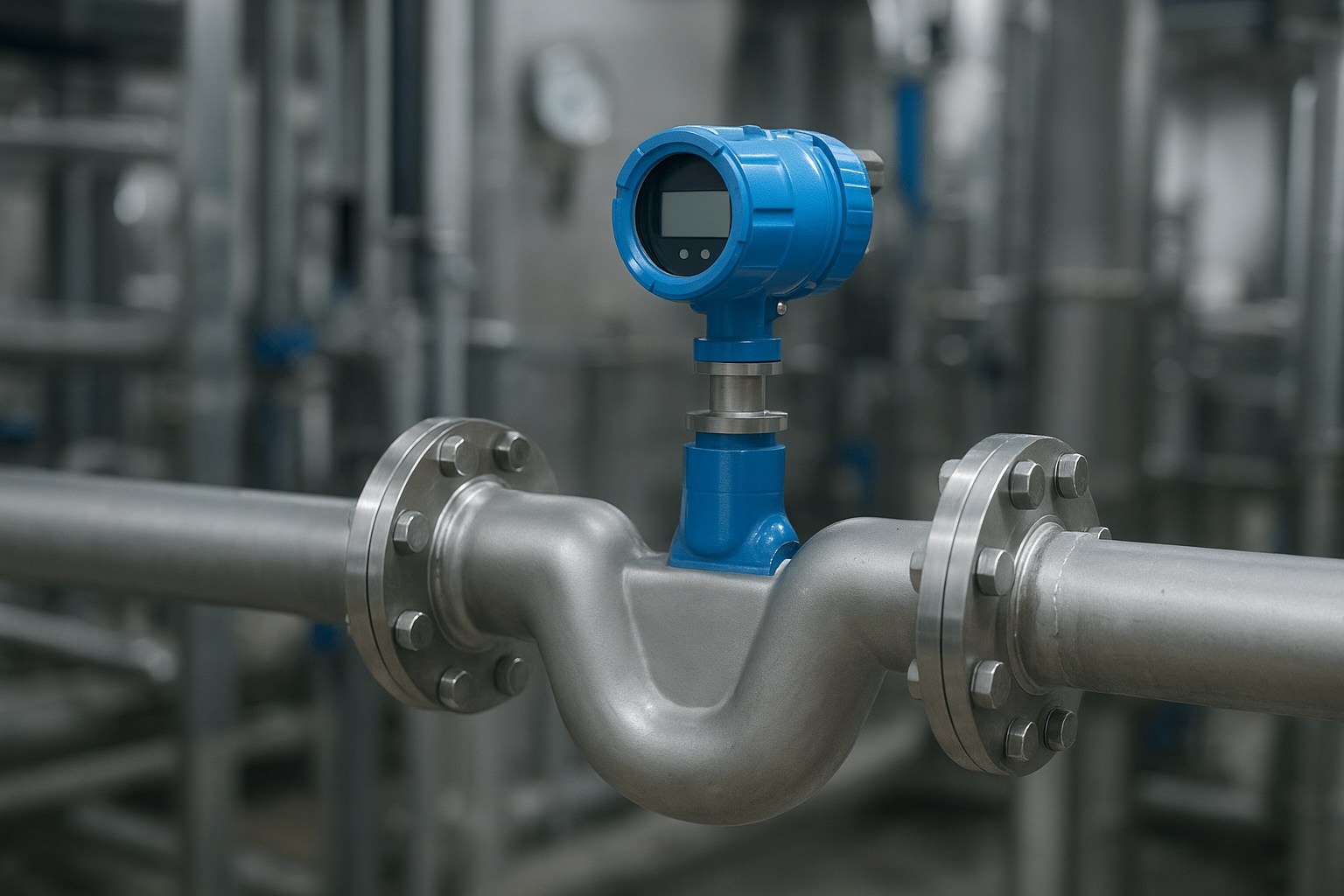
A Coriolis mass flow meter is a device designed to measure the mass flow rate of a fluid traveling through a pipe. Unlike volumetric flow meters, which measure the volume of fluid and require compensation for density changes, Coriolis meters measure the actual mass. This capability ensures higher accuracy and repeatability, which is particularly important in pharmaceutical processes where minor deviations can impact product efficacy.
The working principle of a Coriolis meter is based on the Coriolis effect. When a fluid passes through a vibrating tube, the motion of the fluid causes a slight twisting of the tube proportional to the mass flow rate. Sensors detect this twist and convert it into a signal that represents the mass flow. Many modern Coriolis meters also provide density and temperature measurements, which are invaluable for complex pharmaceutical formulations.
Key Applications in Pharmaceutical Manufacturing
Coriolis mass flow meters are versatile and used throughout pharmaceutical manufacturing, including:
1. Precise Dosing of Active Ingredients
The accuracy of dosing APIs is critical to ensure that each batch meets potency and safety standards. Coriolis meters provide direct mass measurements, eliminating errors caused by variations in fluid density, viscosity, or temperature. This precise measurement ensures that active ingredients are delivered consistently in each production batch.
2. Blending and Mixing Processes
Pharmaceutical products often involve multiple liquid components that must be blended in exact proportions. Coriolis meters enable real-time monitoring of each ingredient's mass flow, allowing automated control systems to maintain precise ratios. This is particularly valuable in high-volume production lines where manual measurement is impractical.
3. High-Viscosity and Shear-Sensitive Fluids
Some pharmaceutical formulations, such as syrups, gels, or suspensions, are viscous or shear-sensitive. Traditional flow meters often struggle with these fluids, leading to measurement errors. Coriolis meters, however, are largely insensitive to viscosity and provide accurate measurements even with challenging fluids.
4. Sterile and Sanitary Applications
Hygiene is paramount in pharmaceutical production. Many Coriolis meters are designed with sanitary, clean-in-place (CIP), and steam-in-place (SIP) compatible designs. This allows integration into sterile production lines without compromising aseptic conditions.
5. Continuous Manufacturing and Process Monitoring
Continuous manufacturing is becoming increasingly popular in the pharmaceutical sector due to efficiency and cost advantages. Coriolis mass flow meters are ideal for continuous production lines, providing real-time flow, density, and temperature data that enable precise process control and quality assurance.
Advantages of Using Coriolis Mass Flow Meters in Pharmaceuticals
1. Unmatched Accuracy
Coriolis meters provide mass flow measurement with an accuracy often better than ±0.1%. This is critical for dosing APIs, controlling blending ratios, and ensuring compliance with stringent pharmaceutical standards.
2. Direct Mass Measurement
By measuring mass rather than volume, Coriolis meters eliminate errors caused by fluid compressibility, density changes, and temperature fluctuations. This is particularly important for formulations containing solvents or multi-phase liquids.
3. Multi-Parameter Measurement
Many modern Coriolis meters measure not only mass flow but also density and temperature. This capability enables real-time monitoring of product quality, ensuring that formulations meet strict regulatory requirements.
4. Reduced Waste and Cost Savings
Accurate measurement prevents overdosing or underdosing, reducing material waste and improving yield. In pharmaceutical manufacturing, where raw materials can be expensive, this translates to significant cost savings.
5. Hygienic Design
Pharmaceutical-grade Coriolis meters often feature smooth surfaces, minimal dead space, and materials compatible with CIP and SIP procedures. These designs minimize contamination risks, ensuring compliance with Good Manufacturing Practices (GMP).
Installation Considerations for Pharmaceutical Lines
Proper installation of Coriolis mass flow meters is essential for reliable performance. Key considerations include:
1. Straight Pipe Requirements
While Coriolis meters are generally less sensitive to flow disturbances than other meters, a short straight pipe run upstream and downstream of the meter helps maintain accuracy, especially in high-precision pharmaceutical applications.
2. Vibration and Mechanical Stress
Coriolis meters are sensitive to external vibrations. In pharmaceutical plants, pumps, agitators, and other mechanical equipment can introduce vibrations that affect readings. Mounting the meter on vibration-isolated supports helps mitigate this issue.
3. Temperature and Pressure Limits
Each Coriolis meter has specific operating temperature and pressure limits. Ensuring that the meter is compatible with the process conditions prevents damage and measurement errors.
4. Sanitary Connections
In sterile pharmaceutical production, selecting meters with appropriate sanitary fittings, such as tri-clamp or aseptic connections, ensures seamless integration with the piping system and facilitates cleaning.
Calibration and Maintenance
Regular calibration and maintenance are crucial for ensuring long-term accuracy:
-
Calibration: Coriolis meters should be calibrated periodically, either in situ using reference standards or by removing the meter for laboratory calibration. Some advanced models feature self-diagnostic capabilities to simplify calibration.
-
Cleaning: Sanitary Coriolis meters are designed for CIP and SIP, allowing cleaning without disassembly. Regular cleaning prevents fouling and contamination.
-
Monitoring for Drift: Continuous monitoring of meter performance can detect drift or anomalies early, preventing errors in critical pharmaceutical processes.
-
Software Updates: Modern Coriolis meters often include digital transmitters with firmware updates. Keeping software up to date ensures optimal performance and access to the latest diagnostic features.
Regulatory Compliance and Quality Assurance
In pharmaceutical manufacturing, compliance with regulatory standards such as FDA 21 CFR Part 11 and GMP is non-negotiable. Coriolis mass flow meters support compliance in several ways:
-
Traceable Data Logging: Many meters provide digital outputs with detailed flow, density, and temperature data that can be logged for batch records and audits.
-
Validation Support: The meters facilitate installation qualification (IQ), operational qualification (OQ), and performance qualification (PQ) processes.
-
Repeatability: Accurate and repeatable measurements ensure that every batch meets stringent quality standards, reducing the risk of regulatory non-compliance.
Challenges and Solutions
While Coriolis meters are highly reliable, pharmaceutical manufacturers should be aware of potential challenges:
-
Foaming or Gas Bubbles: Gas in liquids can affect measurement accuracy. Degassing or using gas-separation techniques can resolve this issue.
-
Extreme Viscosity or Abrasive Fluids: Although less sensitive than volumetric meters, extremely viscous or abrasive fluids may require specific tube materials or meter designs.
-
Installation in Limited Space: Coriolis meters require some straight piping for optimal performance. Compact designs or flexible installation options are available for space-constrained environments.
Future Trends
The adoption of Industry 4.0 and smart manufacturing technologies is driving the evolution of Coriolis mass flow meters in pharmaceuticals:
-
Digital Twin Integration: Real-time flow and density data can feed into digital twins, optimizing process efficiency and predictive maintenance.
-
Wireless and IoT Connectivity: Advanced meters support wireless monitoring, remote diagnostics, and integration with cloud-based quality management systems.
-
Miniaturization: Compact meters allow installation in smaller-scale and pilot pharmaceutical production lines without compromising accuracy.
Conclusion
Coriolis mass flow meters have become an essential component of modern pharmaceutical manufacturing. Their ability to provide highly accurate, direct mass measurements of a wide range of fluids—regardless of viscosity, density, or temperature—ensures consistent product quality, regulatory compliance, and operational efficiency.
From precise dosing and blending to monitoring high-viscosity or sterile fluids, Coriolis meters enable pharmaceutical manufacturers to maintain the exacting standards required in today’s competitive and regulated environment. By investing in proper installation, calibration, and maintenance practices, pharmaceutical companies can fully leverage the advantages of Coriolis technology, improving yields, reducing waste, and safeguarding product integrity.
For engineers, process managers, and QA specialists, integrating Coriolis mass flow meters into production lines is not just a technological choice—it is a strategic step toward achieving precision, reliability, and compliance in pharmaceutical manufacturing.
http://www.accurainstrument.com
accurainstrument -
-
AuthorPosts

- You must be logged in to reply to this topic.