- This topic is empty.
-
AuthorPosts
-
2026-11-27 at 3:09 pm #15539
Achieving a high vacuum level is only one aspect of vacuum system performance. For industrial and scientific applications, long-term reliability also depends on maintaining consistent pressure conditions, preventing contamination, controlling mechanical vibration, and reducing unexpected equipment failures.
These requirements are particularly demanding in sectors such as semiconductor production, aerospace engineering, nuclear technology, advanced material processing, and scientific research. In these industries, vacuum equipment must operate within precisely controlled conditions. Even minor variations in pressure or environmental stability may influence experimental accuracy, manufacturing quality, or the service life of critical components.
Magnetic levitation molecular pumps offer an effective approach to addressing these challenges. Through magnetic bearing technology, the rotor can operate without conventional mechanical contact, helping minimize friction, lubrication-related contamination, and vibration while delivering dependable high-vacuum performance.
For vacuum equipment manufacturers and system integrators, understanding the reliability benefits of magnetic levitation technology is essential when developing vacuum solutions for demanding operating environments.
Understanding Magnetic Levitation Molecular Pump Technology
A molecular pump is a type of high-vacuum equipment used to extract gas molecules from an enclosed chamber and establish an extremely low-pressure environment. Conventional turbomolecular pumps typically rely on high-speed rotating assemblies supported by mechanical bearings or other bearing technologies.
Magnetic levitation molecular pumps operate differently. They use magnetic fields to suspend and position the rotor, enabling high-speed rotation without direct contact with conventional mechanical bearing surfaces.
The absence of normal bearing contact significantly changes the pump's operating characteristics. With less friction between moving components, the system can minimize mechanical wear and reduce potential sources of contamination.
This makes magnetic levitation technology particularly attractive for vacuum applications that require clean operating conditions, consistent performance, and extended periods of continuous operation.
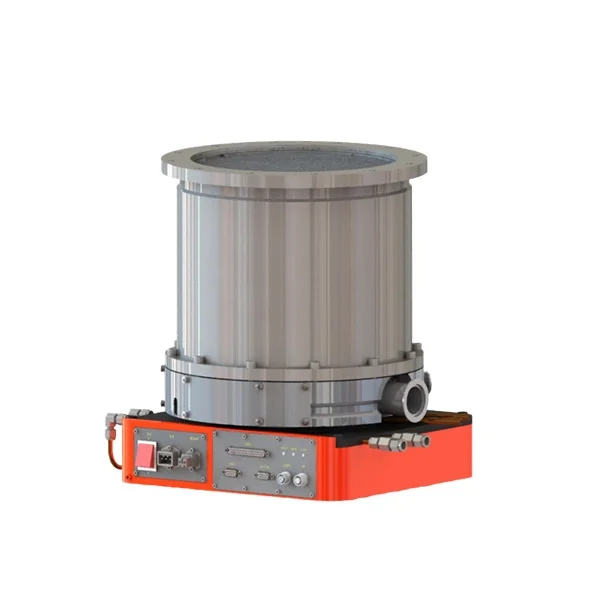
For projects involving strict vacuum cleanliness and reliability requirements, the MTP Series magnetic levitation composite molecular pumps provide an option worth considering during vacuum system selection.
1. Minimizing Mechanical Friction and Wear
Mechanical component deterioration is an important factor affecting the long-term performance of vacuum pumps.
During continuous operation, conventional bearing assemblies are exposed to friction and mechanical stress. Over time, these conditions may contribute to component degradation, increasing the likelihood of maintenance or replacement. Actual service life is also influenced by rotational speed, operating temperature, loading conditions, vibration, and lubrication quality.
Magnetic levitation technology helps address this issue by supporting the rotor through electromagnetic forces rather than conventional mechanical contact. As a result, friction-related wear between the rotor shaft and traditional bearing surfaces can be substantially reduced.
This structural advantage is valuable for vacuum installations that are expected to run for long periods without frequent intervention.
Consider an automated industrial vacuum production line. If a pump experiences mechanical failure, the consequences may extend well beyond repairing or replacing the equipment. Operators may need to interrupt production, isolate the chamber, investigate the fault, re-establish the required vacuum level, and restart the manufacturing process.
By reducing contact-related mechanical wear, magnetic levitation pumps can help improve equipment availability and reduce maintenance interruptions.
2. Creating a Cleaner Vacuum Environment
Contamination control is another major consideration when selecting high-vacuum equipment.
In conventional oil-lubricated pumping arrangements, oil vapor migration or lubricant-related leakage may introduce unwanted substances into the vacuum environment if the system is not properly designed. Although suitable filters, traps, and protective configurations can minimize these risks, contamination prevention remains a priority for sensitive applications.
Magnetic levitation molecular pumps offer an advantage because their rotor support system does not depend on conventional oil-lubricated mechanical bearings. This reduces the potential contamination sources associated with bearing lubrication.
For semiconductor manufacturing, vacuum deposition, analytical instruments, and laboratory research, maintaining a clean vacuum chamber is essential. Unwanted particles or chemical residues may affect surface quality, measurement accuracy, and process consistency.
A magnetic levitation pumping configuration can therefore help engineers establish a cleaner vacuum environment while simplifying the management of certain lubrication-related contamination risks.
3. Controlling Vibration for Greater Operating Stability
Vibration management is particularly important in high-speed vacuum equipment.
When a rotor operates at high rotational speeds, dynamic forces are generated. If these forces are not adequately controlled, vibration may be transmitted to the pump housing, vacuum chamber, connecting structures, and nearby precision instruments.
Excessive vibration can interfere with sensitive measurements, affect mechanical components, and reduce the stability of an integrated vacuum platform.
Magnetic bearing systems use active control technology to monitor and regulate rotor positioning during operation. By maintaining the rotor within its intended operating position, this technology helps control rotor dynamics and minimize vibration transmission.
This is especially beneficial for applications such as mass spectrometry, precision leak detection, surface analysis, and advanced scientific testing.
For instance, a helium leak detection system may need to identify extremely small leakage rates under stable operating conditions. External mechanical interference can make sensitive measurements more challenging and affect the consistency of test results.
Using a magnetic levitation molecular pump with appropriate rotor control characteristics can contribute to better overall system stability.
4. Supporting Extended and Continuous Operation
In many industrial environments, vacuum equipment must operate continuously rather than being switched on only for occasional testing.
Production facilities, semiconductor processing equipment, scientific research installations, and environmental simulation systems may require uninterrupted vacuum operation over extended periods.
Under these conditions, reliability becomes a critical consideration in the entire equipment configuration.
Magnetic levitation molecular pumps can support long-duration operation by reducing mechanical contact and minimizing certain maintenance requirements associated with traditional bearing structures.
Nevertheless, magnetic bearing technology alone cannot guarantee trouble-free operation. The complete pumping system must also be properly configured.
Several factors directly influence operating reliability:
-
Cooling performance: Appropriate thermal management helps maintain stable operating temperatures.
-
Power supply stability: Reliable electrical input is necessary for the pump and its control electronics.
-
Foreline pressure: The backing pump must maintain suitable inlet conditions for molecular pump operation.
-
System cleanliness: Proper chamber preparation helps prevent contamination and unwanted particle accumulation.
-
Vibration isolation: Suitable installation structures can reduce external mechanical interference.
-
Operating procedures: Correct startup, shutdown, and protection strategies help prevent abnormal operating conditions.
Therefore, engineers should evaluate the molecular pump together with the supporting vacuum equipment rather than treating it as an independent component.
5. Improving Performance in Precision Vacuum Applications
The reliability benefits of magnetic levitation molecular pumps become more apparent in applications where vacuum stability directly influences product performance or experimental accuracy.
Semiconductor manufacturing
Semiconductor production involves highly controlled processing environments. Cleanliness, pressure stability, and process repeatability are essential for maintaining manufacturing consistency. Magnetic levitation pumps can help reduce lubrication-related contamination risks and support stable high-vacuum conditions.
Aerospace engineering
Vacuum equipment is widely used in aerospace environmental simulation, component testing, material evaluation, and space-related research. These applications often involve specialized vacuum chambers and demanding test conditions. Reliable pumping performance helps maintain the required environment throughout the testing process.
Nuclear technology
Certain nuclear research, analytical, and specialized manufacturing processes rely on controlled vacuum environments. Equipment reliability and stable operation are important when systems are expected to perform over extended testing or production cycles.
Advanced materials research
Material preparation, vacuum coating, and surface treatment processes may require carefully controlled pressure conditions. A clean and stable vacuum environment helps improve process repeatability and product consistency.
Scientific instrumentation
Research laboratories frequently integrate vacuum pumps with mass spectrometers, analytical instruments, and customized experimental chambers. Reduced vibration and contamination risks can help create more favorable conditions for precision testing.
Across these industries, selecting a molecular pump should involve more than comparing nominal pumping speed and ultimate pressure. Mechanical stability, cleanliness, maintenance requirements, and compatibility with the complete system are equally important.
6. The Importance of Professional Vacuum System Integration
Even an advanced molecular pump cannot deliver optimal results when installed in an improperly designed vacuum system.
The final operating performance is influenced by numerous interconnected factors, including chamber capacity, pipeline conductance, valve arrangement, backing pump specifications, leakage rates, gas loads, temperature conditions, and control strategies.
For this reason, professional vacuum system integration plays an important role in achieving reliable operation.
Sanya Hangfeng Technology Co., Ltd. specializes in high-end vacuum technology and intelligent manufacturing. Its business activities cover research and development, manufacturing, sales, import, and export.
The company's product range includes vacuum acquisition equipment, vacuum testing and analysis systems, helium leak detection equipment, vacuum connection and isolation devices, and both standard and customized vacuum chambers.
In addition to individual vacuum components, the company provides integrated equipment solutions, including environmental simulation systems, mass spectrometry analysis systems, automated helium leak detection equipment, and customized vacuum system integration products.
This comprehensive product and engineering capability is particularly valuable for projects involving multiple interconnected vacuum components.
Rather than selecting a pump based exclusively on its technical specifications, engineers can evaluate the actual application requirements and coordinate the molecular pump with the chamber, valves, backing equipment, detection instruments, and control system.
A properly integrated configuration helps ensure that each component works together to achieve the required vacuum performance and operating reliability.
7. Key Factors to Evaluate When Selecting a Magnetic Levitation Molecular Pump
Choosing suitable vacuum equipment requires a clear understanding of the intended application. Before integrating a magnetic levitation molecular pump into a new system, engineers should examine several important technical parameters.
1. Required vacuum pressure
Identify the target pressure range and determine whether the selected molecular pump can achieve the required operating conditions. The expected gas composition and process requirements should also be considered.
2. Appropriate pumping speed
Pumping speed affects how quickly a chamber reaches its target pressure. Selection should account for chamber volume, gas load, leakage, outgassing, and the required pump-down time.
3. Contamination control requirements
For semiconductor, coating, and analytical applications, contamination prevention may be a major selection criterion. Engineers should assess whether an oil-free bearing arrangement can help satisfy the cleanliness requirements of the process.
4. Vibration and rotor stability
Applications involving precision instruments or sensitive measurements require careful consideration of vibration characteristics. Rotor control performance and the installation environment should both be evaluated.
5. Compatibility with supporting equipment
A molecular pump must operate correctly alongside its backing pump, vacuum valves, controller, cooling system, and chamber. Checking interface requirements and operating conditions before installation helps avoid integration problems.
6. Maintenance and service requirements
Reduced mechanical friction can simplify certain maintenance tasks, but it does not eliminate the need for regular inspection. Buyers should also consider spare parts availability, control system monitoring, technical support, and long-term operating costs.
By evaluating these factors together, engineers can select equipment that meets both immediate performance targets and long-term reliability expectations.
Building Vacuum Systems for Long-Term Reliability
Magnetic levitation molecular pumps offer more than an alternative bearing structure for high-vacuum applications. Their non-contact rotor support technology helps address several common operational challenges, including mechanical wear, lubricant-related contamination, vibration, and maintenance interruptions.
These benefits are particularly valuable in demanding applications where vacuum equipment must maintain stable conditions over extended operating periods.
Sanya Hangfeng Technology Co., Ltd. combines vacuum equipment development with system integration capabilities to serve different industrial and research requirements. Its core technical team has more than ten years of experience in the vacuum industry, supported by standardized manufacturing processes, precision engineering capabilities, and large-scale intelligent production and delivery facilities.
The company also has experience serving aerospace, nuclear technology, semiconductor manufacturing, and advanced scientific research applications, providing a foundation for developing vacuum solutions tailored to different operating environments.
For demanding vacuum projects, achieving a specified pressure is only the starting point. A well-designed system should also deliver consistent performance, maintain a clean operating environment, minimize unnecessary downtime, and remain manageable throughout its intended service life.
When appropriately selected and integrated, magnetic levitation molecular pumps can make a meaningful contribution to these objectives. By reducing mechanical contact, controlling contamination risks, and supporting rotor stability, they help engineers develop more dependable vacuum systems for advanced industrial and scientific applications.
http://www.aeropextech.com
Sanya Hangfeng Technology Co., Ltd. -
-
AuthorPosts

- You must be logged in to reply to this topic.