- This topic is empty.
-
AuthorPosts
-
2026-06-24 at 4:41 pm #13850
In modern industrial maintenance and repair operations, precision machining plays a crucial role in ensuring equipment safety, sealing performance, and long-term operational stability. Heat exchangers, in particular, require extremely accurate flange surface finishing to maintain proper sealing under high pressure and temperature conditions.
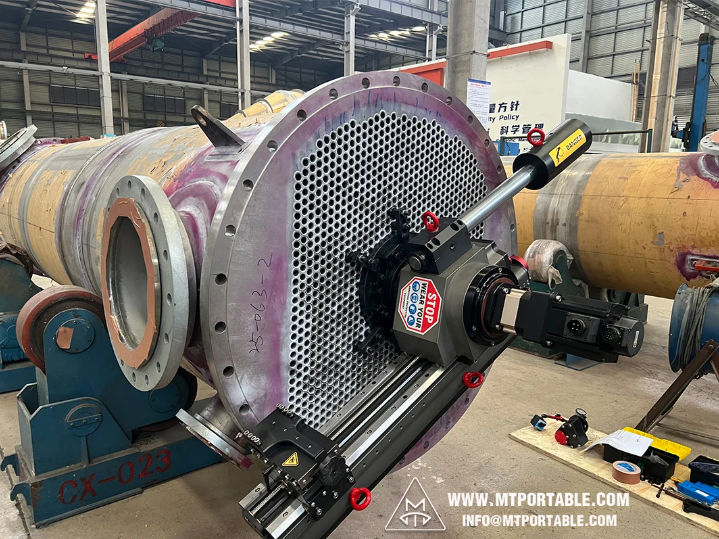
The on-site application of the MT-FI60 flange facing machine demonstrates how portable machining equipment can significantly improve efficiency and quality in heat exchanger maintenance projects. This case study explores its practical use, advantages, and key considerations during field operation.
Importance of Flange Facing in Heat Exchanger Maintenance
Flange surfaces are critical sealing interfaces in heat exchangers. Even minor surface defects such as scratches, corrosion, or unevenness can lead to leakage, reduced efficiency, or system failure.
During long-term operation, heat exchangers are exposed to thermal cycling, pressure fluctuations, and corrosive media, all of which can degrade flange surfaces. As a result, periodic re-machining is often required to restore flatness and sealing integrity.
On-site flange facing eliminates the need to dismantle and transport large equipment to a workshop, reducing downtime and avoiding complex reinstallation procedures. This makes portable machining solutions essential for modern maintenance strategies.
Overview of the MT-FI60 Flange Facing Machine
The MT-FI60 flange facing machine is a portable machining device designed for precision surface finishing of flanges in field conditions.
It is engineered to perform machining operations directly on installed equipment, providing a stable and accurate cutting process. The machine is typically used for heat exchangers, pressure vessels, pipelines, and other large industrial components where workshop machining is not practical.
Its compact structure, rigid clamping system, and adjustable cutting mechanism allow it to handle different flange sizes and machining requirements with high precision.
On-Site Installation and Setup Process
Proper installation is critical to achieving accurate machining results.
Before operation, the machine is securely mounted onto the flange surface using an internal or external clamping system, depending on the flange configuration. This ensures stability during rotation and cutting.
After installation, alignment is carefully adjusted to ensure the cutting tool is perfectly centered. Even slight misalignment can affect surface flatness and sealing performance, so precision setup is a key step in the process.
Once alignment is confirmed, the machine is powered and tested at low speed before full machining begins.
Machining Process for Heat Exchanger Flanges
The actual machining process involves controlled rotation of the cutting head across the flange surface.
The cutting tool gradually removes surface imperfections, corrosion layers, and uneven material to restore a smooth and uniform sealing face. Depending on the condition of the flange, multiple passes may be required to achieve the desired surface finish.
Operators continuously monitor cutting depth, feed rate, and surface quality throughout the process. This ensures that the final machined surface meets strict industrial sealing standards.
The ability to perform precise machining directly on-site significantly reduces equipment downtime and improves maintenance efficiency.
Advantages of Using Portable Flange Facing Machines
One of the main advantages of portable flange facing equipment is its ability to eliminate disassembly and transportation requirements.
Traditional machining methods often require removing large heat exchanger components and sending them to a workshop, which is time-consuming and costly. In contrast, on-site machining allows maintenance to be completed directly at the installation location.
This approach also reduces risks associated with reassembly errors, alignment deviations, and additional handling damage.
Furthermore, portable machines like the MT-FI60 provide high machining accuracy comparable to workshop equipment, making them suitable for demanding industrial applications.
Precision, Stability, and Surface Quality Control
Precision is a critical factor in flange machining, especially for heat exchangers operating under high pressure.
The MT-FI60 system is designed to maintain stable cutting performance throughout the machining process. Its rigid structure minimizes vibration, ensuring a consistent surface finish.
Surface roughness and flatness are carefully controlled to meet sealing requirements. A high-quality flange surface improves gasket performance and reduces the likelihood of leakage during operation.
Consistent machining accuracy also extends equipment service life and enhances system reliability.
Safety Considerations During On-Site Operation
Safety is a key priority when performing on-site machining in industrial environments.
Operators must ensure that the machine is properly secured before starting operation. All rotating components should be checked for stability, and the work area must be cleared of unnecessary personnel.
Protective equipment and proper operational procedures are essential to prevent accidents during machining.
Additionally, continuous monitoring during operation helps detect abnormal vibration, tool wear, or alignment issues early, reducing operational risks.
Efficiency Benefits for Industrial Maintenance Projects
The use of portable flange facing machines significantly improves maintenance efficiency in heat exchanger systems.
By eliminating the need for dismantling and transport, downtime is greatly reduced. This is particularly important in industries where equipment shutdowns result in production losses.
Faster turnaround times also allow maintenance teams to complete more projects within a shorter period, improving overall operational productivity.
In large-scale industrial facilities, these efficiency gains translate directly into cost savings and improved asset utilization.
Applications Beyond Heat Exchangers
While this case focuses on heat exchangers, flange facing machines are widely used in other industrial sectors as well.
Common applications include pipelines, pressure vessels, petrochemical equipment, and power generation systems. Any equipment that relies on flange sealing surfaces can benefit from on-site machining technology.
The versatility of portable flange facing machines makes them an essential tool for maintenance teams working across multiple industries.
Conclusion
The on-site application of the MT-FI60 flange facing machine in heat exchanger machining demonstrates the value of portable precision equipment in modern industrial maintenance.
By enabling accurate flange resurfacing directly on-site, this technology reduces downtime, improves sealing performance, and enhances operational efficiency. Its combination of precision, portability, and reliability makes it a practical solution for demanding industrial environments.
As industrial systems continue to grow in scale and complexity, on-site machining technologies will play an increasingly important role in ensuring equipment performance, safety, and long-term sustainability.
http://www.mtportable.com
Jichuang Machinery Manufacturing Wuxi Co.,Ltd -
AuthorPosts

- You must be logged in to reply to this topic.