- This topic is empty.
-
AuthorPosts
-
2026-04-03 at 2:01 pm #13256
Architectural HVAC design has evolved far beyond simple air distribution. Today’s commercial and high-end residential projects demand precise airflow control, seamless ceiling integration, corrosion resistance, acoustic performance, and aesthetic minimalism—all within strict construction timelines and energy codes.
Against this backdrop, single slot diffusers have become a preferred choice in modern buildings. However, performance and appearance are directly determined by how they are engineered and manufactured. This article provides a comprehensive, experience-driven analysis of single slot diffuser, covering material selection, extrusion technology, CNC processing, finishing systems, quality control, customization capabilities, and application-specific considerations. In this blog post, Tanto, as high quality HVAC slot diffusers manufacturer, will share the features of single slot diffuser manufacturing techniques for architectural HVAC vent solutions.
The Role of Single Slot Diffusers in Architectural HVAC Vent Solutions
In architectural HVAC vent solutions, single slot diffusers are not merely air terminals—they are visible design elements integrated into ceilings, bulkheads, walls, and even floor systems.
Compared to traditional square ceiling diffusers, single slot air diffusers offer:
-
Linear air distribution along extended ceiling lines
-
Reduced visual interruption in minimalist interiors
-
Compatibility with gypsum board, metal ceilings, and suspended systems
-
High induction performance for heating and cooling modes
-
Customizable slot widths and plenum configurations
Because these products sit at the intersection of HVAC engineering and architectural finishing, manufacturing techniques must address both airflow physics and surface detailing standards.
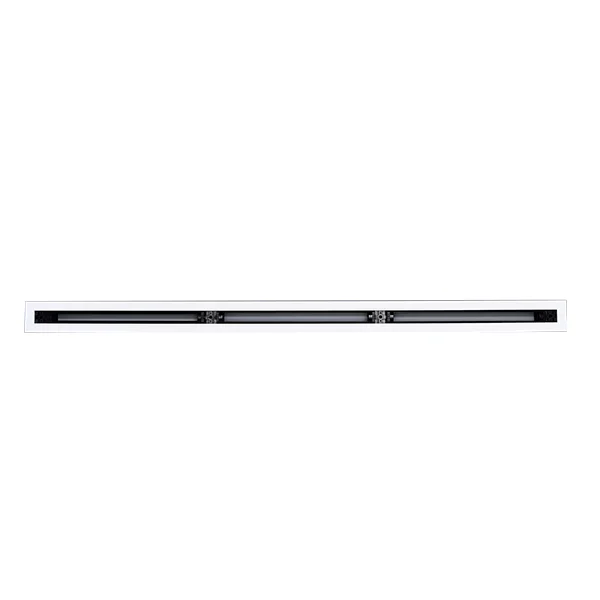
Aluminum Extrusion in Single Slot Diffuser Manufacturing Techniques
The foundation of most architectural single slot diffusers lies in aluminum extrusion technology. The extrusion stage defines dimensional accuracy, structural integrity, and the visual straightness of the diffuser profile.
Alloy Selection
Common alloys include:
-
6063-T5 aluminum for architectural-grade surface finish
-
6061 aluminum for higher structural rigidity in longer spans
For architectural HVAC vent solutions, 6063 is widely preferred due to its superior anodizing and powder coating compatibility.
Die Precision and Profile Consistency
In high-performance single slot diffuser manufacturing techniques, extrusion dies are engineered to maintain:
-
Slot width tolerance within ±0.1 mm
-
Straightness over long linear sections
-
Uniform wall thickness to prevent warping
Poor die design leads to uneven slot openings, which directly affects airflow velocity and aesthetic alignment when multiple diffusers are joined in sequence.
Thermal Stability During Extrusion
Temperature control during extrusion is critical. Excessive heat may cause surface grain defects, while insufficient heat increases internal stress. Professional manufacturers integrate digital thermal monitoring systems to ensure repeatable extrusion quality.
CNC Machining and Structural Detailing for Linear Slot Diffusers
After extrusion, precision machining ensures installation compatibility and airflow adjustability.
End Cap Fabrication
Architectural installations often require:
-
Mitered corners
-
Seamless butt joints
-
Custom return air configurations
CNC-controlled end cap fabrication improves alignment accuracy and reduces onsite modification.
Adjustable Blade and Pattern Controller Integration
High-quality single slot diffuser manufacturing techniques incorporate:
-
Adjustable air pattern controllers
-
Removable deflection blades
-
Damper systems for airflow balancing
CNC milling ensures consistent fit between internal components and the diffuser housing, preventing vibration noise during operation.
Slot Edge Finishing
Sharp or uneven slot edges not only compromise safety but also disrupt laminar airflow. Precision edge deburring and micro-polishing help maintain aerodynamic efficiency.
Surface Finishing in Architectural HVAC Vent Production
Surface finishing is often underestimated in HVAC manufacturing, yet in architectural projects it becomes a decisive factor.
Powder Coating for Interior Applications
Electrostatic powder coating offers:
-
Uniform coverage
-
High scratch resistance
-
Long-term color stability
Architectural HVAC vent solutions frequently demand RAL color customization to match ceiling systems. Consistency across production batches requires controlled curing temperature and coating thickness monitoring.
Anodizing for Premium Finishes
For exposed linear diffusers in high-end retail, hospitality, or corporate spaces, anodizing provides:
-
Metallic appearance
-
Corrosion resistance
-
Reduced maintenance
Single slot diffuser manufacturing techniques must adapt extrusion preparation processes to meet anodizing standards without surface pitting.
Corrosion Protection in Coastal Projects
When installed in coastal or high-humidity environments, surface treatment must meet enhanced corrosion resistance standards. Pre-treatment processes such as chromate conversion coating or environmentally compliant alternatives ensure durability.
Airflow Engineering Behind Slot Geometry Design
Manufacturing techniques are inseparable from airflow performance.
Slot Width and Throw Performance
Single slot diffusers are available in various slot widths (typically 15–25 mm). The width influences:
-
Air velocity
-
Throw distance
-
Induction rate
In architectural HVAC vent solutions, the correct slot geometry must align with ceiling height and room load calculations.
Plenum Box Integration
Well-designed plenums:
-
Balance static pressure
-
Reduce turbulence
-
Improve acoustic control
Manufacturing accuracy ensures plenum connection flanges align precisely with ductwork, minimizing air leakage.
Noise Reduction Strategies
Acoustic performance is a growing requirement in offices, healthcare facilities, and residential luxury apartments.
Single slot diffuser manufacturing techniques contribute to low noise by:
-
Eliminating internal vibration
-
Using smooth internal surfaces
-
Maintaining consistent airflow transitions
Custom Manufacturing for Project-Specific Architectural Requirements
Architectural projects rarely follow standard dimensions. Customization capability is therefore a major differentiator.
Custom Length and Modular Joining Systems
Linear air diffusers often exceed standard 1.2 m lengths. Manufacturing processes must support:
-
Continuous lengths up to 2–3 meters
-
Invisible joint connectors
-
Structural reinforcement for long spans
Precision joining systems ensure alignment remains visually seamless.
Curved and Angled Slot Diffusers
Complex architectural ceilings may require:
-
Curved diffusers
-
Angled intersections
-
Radius corners
Advanced single slot diffuser manufacturing techniques use custom bending equipment combined with CNC finishing to maintain slot uniformity along curved profiles.
Integration with Lighting and Ceiling Systems
Modern architectural HVAC vent solutions frequently integrate with:
-
LED linear lighting
-
T-bar suspended ceilings
-
Gypsum board flush installations
Manufacturing must consider flange design, mounting brackets, and structural compatibility.
Quality Control in Single Slot Diffuser Production
Performance consistency across large commercial projects depends on structured quality control.
Dimensional Inspection
Using digital calipers and coordinate measuring systems, manufacturers verify:
-
Slot uniformity
-
Profile straightness
-
Mounting flange tolerance
Coating Thickness Testing
Powder coating thickness must meet specified micron ranges to ensure durability without clogging the slot opening.
Air Leakage and Performance Testing
High-level manufacturers conduct airflow and leakage tests to confirm that the product meets HVAC engineering standards.
Quality assurance is not a marketing add-on—it directly affects installation efficiency and lifecycle reliability.
Sustainability and Material Efficiency in Modern Manufacturing
Sustainability is increasingly integrated into architectural HVAC vent solutions.
Recyclable Aluminum Use
Aluminum diffusers are fully recyclable. Responsible manufacturers incorporate recycled content while maintaining structural integrity.
Energy-Efficient Production Processes
Optimized extrusion heating cycles and powder curing systems reduce overall carbon footprint.
Low-VOC Coatings
Compliance with green building standards requires low-emission finishing materials.
Sustainable single slot diffuser manufacturing techniques align with LEED-oriented projects and environmentally conscious developers.
Installation Efficiency and Field Performance Considerations
Manufacturing precision directly affects site performance.
Installation Alignment
Accurate dimensions reduce the need for onsite cutting or modification, accelerating construction schedules.
Maintenance Accessibility
Removable cores and accessible dampers simplify long-term servicing.
Long-Term Structural Stability
Properly engineered aluminum profiles resist sagging over time, maintaining visual alignment in large commercial spaces.
Future Trends in Architectural Linear Air Distribution
As architecture continues evolving toward integrated ceiling systems and invisible mechanical design, manufacturing techniques will increasingly focus on:
-
Ultra-narrow slot profiles
-
Integrated smart airflow control systems
-
Prefabricated modular HVAC ceiling components
-
BIM-compatible product modeling
Manufacturers who combine engineering precision with architectural collaboration will lead the next phase of architectural HVAC vent solutions.
Conclusion
Single slot diffusers represent more than a linear air outlet—they embody the intersection of HVAC engineering, industrial manufacturing, and architectural detailing.
Effective single slot diffuser manufacturing techniques for architectural HVAC vent solutions require mastery of aluminum extrusion, CNC precision machining, surface finishing technologies, airflow engineering, and rigorous quality control systems.
From custom curved installations to long-span commercial ceiling integrations, manufacturing decisions determine not only airflow performance but also visual impact and installation efficiency.
For architects, mechanical engineers, and HVAC contractors seeking long-term reliability and seamless integration, understanding the technical depth behind single slot diffuser production is essential.
In a market increasingly driven by energy performance standards and architectural refinement, precision manufacturing is no longer optional—it is the foundation of modern air distribution design.
-
-
AuthorPosts

- You must be logged in to reply to this topic.