- This topic is empty.
-
AuthorPosts
-
2026-09-16 at 10:13 am #14721
Corrosion is a slower failure mode than most of the problems a generator set specification usually focuses on, which is exactly why it is easy to under-specify. A unit that starts and runs perfectly on delivery can still lose years of service life to salt spray, humidity or sand ingress if the enclosure and coating were chosen for a temperate site rather than the coastal, marine or tropical environment it actually ends up in. MPMC treats anti-corrosion coating as a graded specification rather than a single fixed standard, which lets a buyer match the protection level to the site rather than paying for more than the environment demands, or under-protecting a harsher one.
MPMC’s Coating Classes: C-3, C-4 and C-5
MPMC’s containerised diesel generator sets are finished in one of three anti-corrosion coating classes rated to ISO 12944: C-3, C-4 or C-5, selected according to site severity. MPMC’s containerised range is designed for operation up to 50°C ambient with copper radiators and optimised cooling as standard, and its enclosures carry C4/C5-level anti-corrosion coating suited to harsh coastal and tropical environments where a standard industrial finish would degrade faster than the equipment inside it.
Class
Standard
Typical Application
C-3
ISO 12944
Standard industrial / low-corrosivity sites
C-4
ISO 12944
Coastal and tropical environments; also applied to MPMC’s HBD-A BESS enclosures
C-5
ISO 12944
Offshore and marine-grade deployment; 500–700 hours salt-spray tested
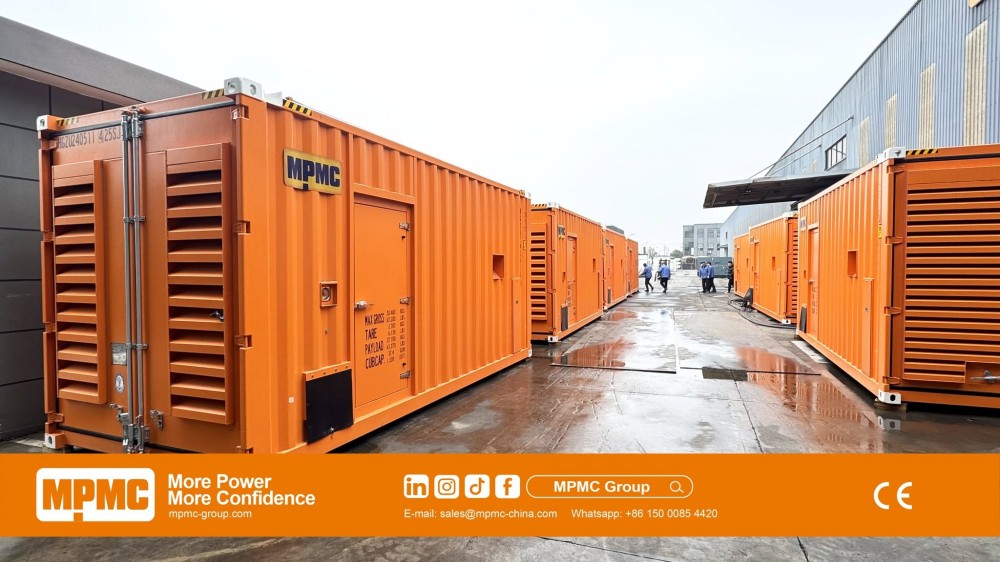
MPMC containerised generator set, Cummins-powered, from a 10-unit offshore oil and gas rental fleet built for marine-grade corrosion protection, delivered to Brazil.
Salt-Spray Testing Behind the Coating Claim
A coating class is only as credible as the testing behind it. MPMC documents 500 to 700 hours of salt-spray testing on its C4/C5-level corrosion protection, alongside NDT magnetic particle flaw detection on every chassis, as part of its standard quality manufacturing process. This combination of extended salt-spray testing and per-unit chassis inspection is what MPMC points to when a buyer asks for evidence behind a coating claim, rather than a general statement that the enclosure is “corrosion resistant.”
The Process Behind the Coating, Not Just the Coating Itself
Anti-corrosion performance depends as much on surface preparation as on the coating material itself. MPMC’s manufacturing process runs laser cutting, certified welding — every welder holds an operation licence and completes 30 days of training — NDT magnetic particle testing on each chassis, pressure testing and sandblasting before the C-3, C-4 or C-5 coating is ever applied. Sandblasting in particular removes mill scale, rust and surface contamination that would otherwise sit under the coating and undermine its adhesion, which is why a supplier’s coating claim is only as reliable as the surface preparation step that comes before it. This same C4-level anti-corrosion standard is applied across MPMC’s product range, including its HBD-A Series battery storage line, reflecting a company-wide manufacturing standard rather than a coating specification unique to one product.
Documented Marine and Coastal Deployments
MPMC’s Brazil offshore oil and gas rig project, at 10.28 MW and built on Cummins KTA50-G12 engines with Stamford S6L1D-H4 alternators, was containerised specifically for offshore marine deployment, a scale of project MPMC notes requires precise load-sharing control, marine-grade corrosion protection with C5 coating available, and rapid field commissioning. MPMC’s Mexico stadium project, at 6.9 MW across five 1,375 kVA units powered by Cummins KTA50-G3 engines with Leroy-Somer LSA 50.2 M6 alternators, specified C-5 painting alongside a multi-radiator 50°C copper radiator package — an example of a coastal or high-humidity venue project specifying the top coating class even outside a purely offshore application. MPMC’s Kenya remote microgrid project, running in a high-UV, sandy, grid-fluctuating environment, is documented with a zero-corrosion outcome after deployment, a result MPMC attributes in part to the coating specification chosen for that site.
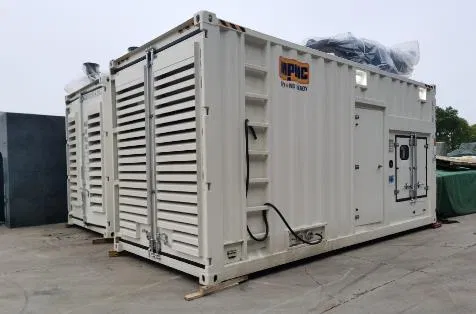
MPMC 6.9 MW containerised generator sets, Cummins-powered, specified with C-5 anti-corrosion painting for a stadium project in Mexico.
Reading Site Exposure Correctly Before Specifying a Coating
Coastal proximity is the most obvious driver of corrosion risk, but it is not the only one: high humidity, airborne sand or dust, industrial pollutants, and even coastal fog inland from the shoreline can accelerate the same failure mode. A site assessment that only checks distance from the sea can miss a genuinely high-exposure inland location, or over-specify a mild coastal site that does not actually need the top coating class. MPMC’s sales engineering team works from the site’s actual environmental conditions, including altitude, humidity and airborne contaminant exposure, rather than treating coating class as a simple function of map distance from open water.
Matching the Coating Class to the Site’s Exposure
Confirming the following points with a supplier before an order is placed helps ensure the coating class actually matches the site rather than defaulting to whatever the standard quotation happens to include.
• Describe the site’s actual exposure conditions (coastal distance, humidity, sand, industrial pollutants) rather than only its general region
• Ask which coating class (C-3, C-4 or C-5) is quoted as standard, and what upgrading to a higher class would cost
• Request the salt-spray test duration and standard the quoted coating has actually been tested against
• Confirm whether the radiator and cooling package are also rated for the site’s ambient temperature, not just the enclosure coating
• Ask for a documented reference from a comparable coastal, offshore or high-humidity project
• Check whether NDT chassis inspection is included as standard or only available as an optional upgrade
https://www.mpmc-china.com/
MPMC Powertech Corp. -
AuthorPosts

- You must be logged in to reply to this topic.