- This topic is empty.
-
AuthorPosts
-
2026-07-13 at 2:26 pm #14006
Walking gear is essential for dog walks, preventing accidents and meeting local pet management rules. Three mainstream types—collars, harnesses and matching sets—have distinct pros and cons. Wrong choices may hurt dogs’ trachea or bones. This guide compares all options with a data table to help you pick safe, well-fitted equipment.
I.Core Pros, Cons & Suitable Scenarios of Three Walking Gear Types
1. Traditional Collars: Simple and Versatile, Ideal for Gentle Dogs
Light, simple and decorative with name tag space. But all pulling force presses on the neck, easily damaging tracheas for dogs that lunge hard. Best for calm, gentle dogs for short casual walks.
2. Dog Harnesses: Body Protection, Perfect for Active and Lunging Dogs
Pulling force spreads across chest and back to avoid neck injuries, with low escape risk. Drawbacks: bulkier to put on; poor ventilation on hot days. Ideal for active, excitable pups and flat-faced breeds.
3. Complete Leash Sets: Cost-Effective and Universal for Daily Use
Pre-matched harness/collar + leash with consistent load-bearing capacity, cost-effective and ready to use. Custom sizes are required for ultra-small or giant dogs due to fixed standard cuts. Great for all-round daily use.
II. Precise Selection Data Table for Dog Walking Gear by Body Type
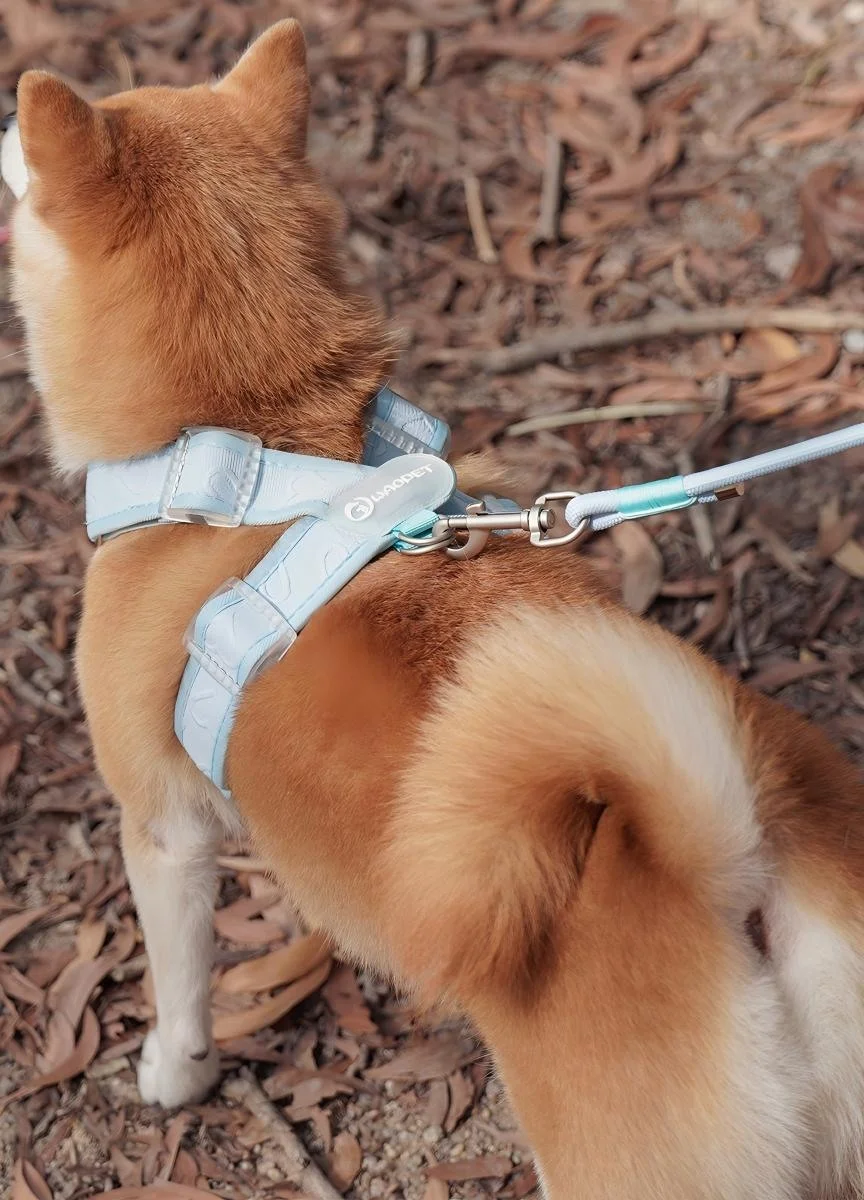
Based on the universal industry classification standard for canine body sizes, dogs are divided into five categories: ultra-small, small, medium, medium-large, and giant. The following sorted selection table covers weight standards, neck and torso characteristics, recommended gear, size references, and key notes for most common dog breeds.
Body Size Category
Weight Standard
Typical Breeds
Best Recommended Gear
Alternative Gear
Key Selection Tips
Ultra-Small Dogs
1–4kg
Chihuahua, Yorkshire Terrier, Teacup Dog, Pomeranian Puppy
Lightweight Narrow Harness + Thin Leash Set
Ultra-Soft Fabric Collar
Fragile bones and trachea; avoid hard and wide collars. Prioritize breathable mesh material to prevent chest compression; gear weight should be under 50g.
Small Dogs
4–10kg
Teddy, Bichon Frise, Schnauzer, Adult Pomeranian, French Bulldog
Standard Breathable Harness
Soft Leather Collar, Basic Leash Set
Most small dogs are active and prone to pulling; chest and neck protection is essential. French Bulldogs have fragile short-nose respiratory systems and must never be walked with a collar only.
Medium Dogs
10–25kg
Border Collie, Beagle, Corgi, English Springer Spaniel, Shiba Inu
Reinforced Harness, Complete Walking Set
Thick Wear-Resistant Collar
High activity level and strong explosive pulling force; select gear with a load capacity of ≥50kg. Corgis have short waists and legs; avoid tight wrapping and reserve sufficient movement space.
Medium-Large Dogs
25–40kg
Labrador Retriever, Golden Retriever, Siberian Husky, German Shepherd, Samoyed
High-Strength Reinforced Harness Set
Wide Thick Nylon Collar
Strong lunging and breaking-free tendency; choose double-layer reinforced anti-pull styles with sturdy buckles. Collars are only for daily wearing, not for walking traction.
Giant Dogs
Over 40kg
Alaskan Malamute, Old English Sheepdog, Rottweiler, Great Pyrenees, Tibetan Mastiff
Custom Wide Anti-Pull Harness Set
Heavy-Duty Collar (Decoration Only)
Extremely strong pulling force; require exclusive XL/XXL sizes (neck circumference over 63cm). Prefer metal reinforced buckles to prevent breakage and safety hazards.
III. Special Selection Rules for Specific Scenarios & Special Dog Types
Besides body size, age, physical condition, and usage scenarios are critical factors for gear selection. Flexible adjustments are necessary instead of one-size-fits-all choices.
1. Puppies & Senior Dogs: Prioritize Comfortable and Protective Gear
Their undeveloped or degraded joints and fragile tracheas call for lightweight breathable harnesses. Tight hard collars are forbidden.
2. Lunging & Strong Breeds: Choose Professional Anti-Pull Sets
High-energy pulling breeds like Huskies and Border Collies need professional anti-pull sets with dual pressure points to prevent slipping and reduce neck strain.
3. Daily Indoor & Outdoor Use: Classified Gear Application
Light collars fit short neighborhood strolls. Reinforced harness sets are mandatory for long hikes and busy roads for better stability.
IV. General Shopping Avoidance Tips
-
Measure neck & chest circumference before buying; neither too tight nor too loose.
-
Choose breathable mesh, soft nylon or eco-leather; stay away from rough low-grade fabrics.
-
Remove all walking gear indoors to prevent skin irritation and matted fur.
-
Check webbing and buckles every 3–6 months; replace worn parts immediately.
Conclusion
Dog walking gear serves to protect outdoor safety and standardize pet-raising behavior. Instead of blindly following popular styles, owners should select collars, harnesses, or complete sets according to their dog’s body type, personality, age, and usage scenarios to balance comfort and safety. Scientific selection and standardized use reflect responsible pet care and civilized dog-raising habits.
http://www.dogfavors.com
dogfavors -
-
AuthorPosts

- You must be logged in to reply to this topic.